December 29, 2013
ravaged landscapes
From Lewis Baltz's Candlestick Point-- a book of stark photographs of a ravaged, ugly land that is far removed from an heroic vision of America. This is the wasteland.
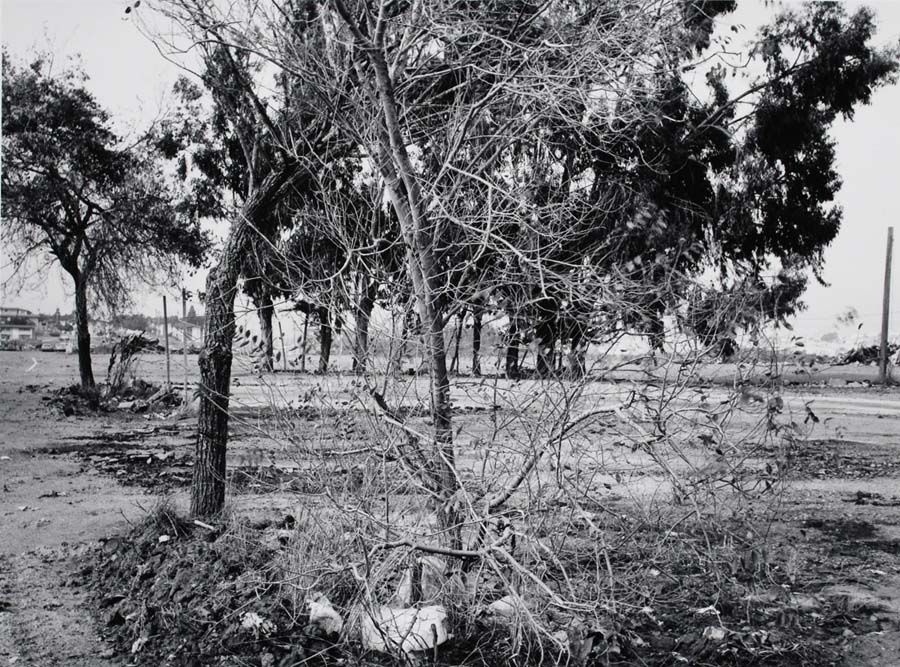 Lewis Baltz, Candlestick Point, #45, 1989
This is conceptual rigorous work premised on groups of images or a series. As a body of work---not individual images---it involves a different kind of thinking to much contemporary art photography---Baltz is more closely aligned with conceptual art than with traditional medium of photographic culture with its parochial, provincial culture that was suffocating.
December 17, 2013
aerial views of the Australian landscape
The aerial view of the landscape offers a different perspective to earth-bound landscape photographers. The former has been photographically explored by Richard Woldendorp.
He works from small aircraft such as a Cessna flying between 500 and 1,000 metres above the ground and uses three different cameras, a Pentax 6x7, a Fuji 6x9 and a Canon 5D looking down on a landscape from the aeroplane at noon. The emphasis is on form and design and his latest book is Abstract Earth, which draws on over 20 years of work.
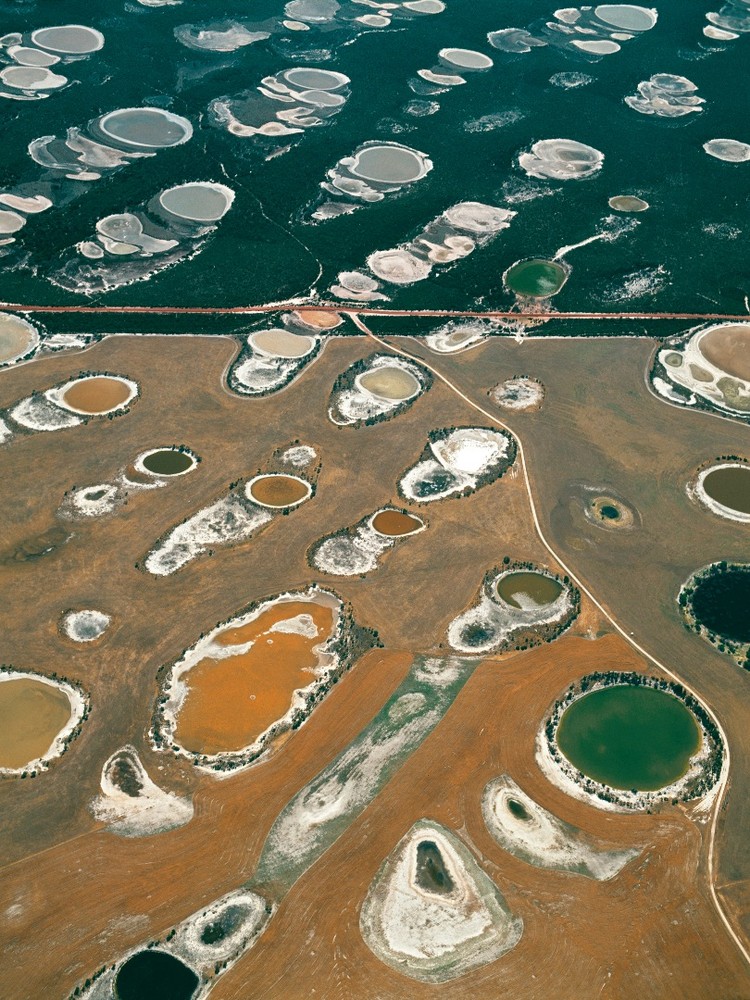 Richard Woldendorp, Salt lakes surrounded by wheat fields, 50 kilometers north east of Esperance, Western Australia, from the series Abstract Earth: A View from Above
These are not some painterly abstractions for their own sake or glib, graphic compositions. Many of the photos of the Western Australian landscape, for instance, show a landscape that has been badly damaged by farming.
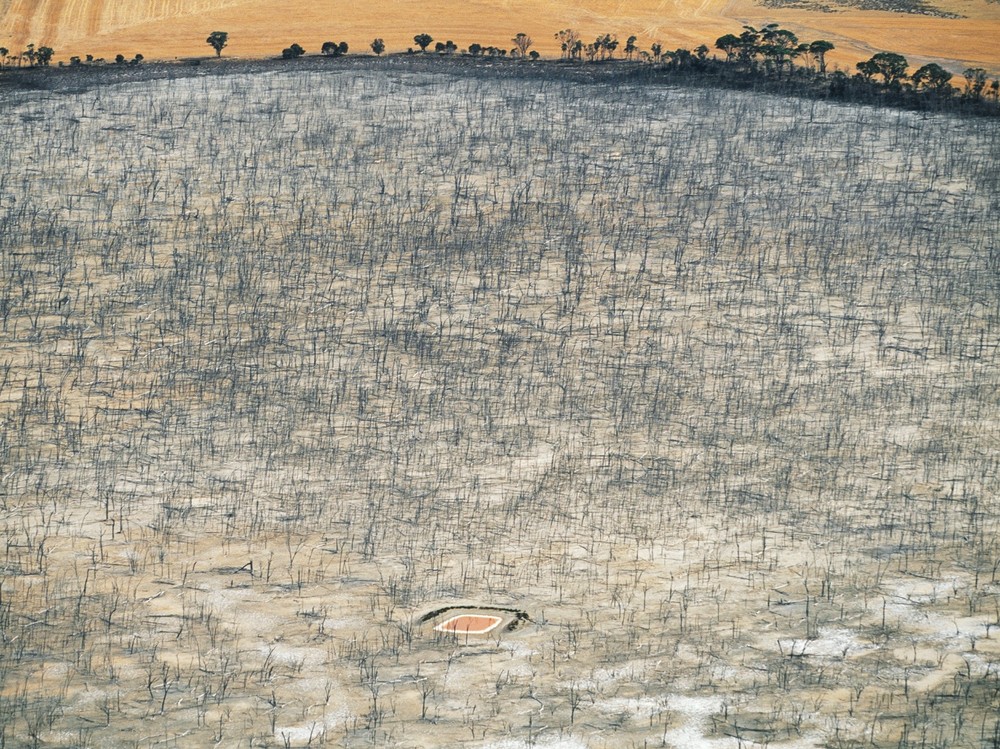 Richard Woldendorp, Saltwater affected dam, Wagin, Western Australia, Australia from the series Abstract Earth: A View from Above
In the above picture the rising saltwater table from the surrounding wheat farms has killed the forest and the freshwater dam.
December 12, 2013
Wall Street in the 1970s: Charles Gatewood
In his "Wall Street" series of the 1970s, Charles Gatewood captured the eerie starkness of life in the shadows of New York's financial center. Between 1972 and 1976, Gatewood hung out on corners near the New York Stock Exchange. Most of the people he photographed were walking to or from office jobs that required them to dress the part.
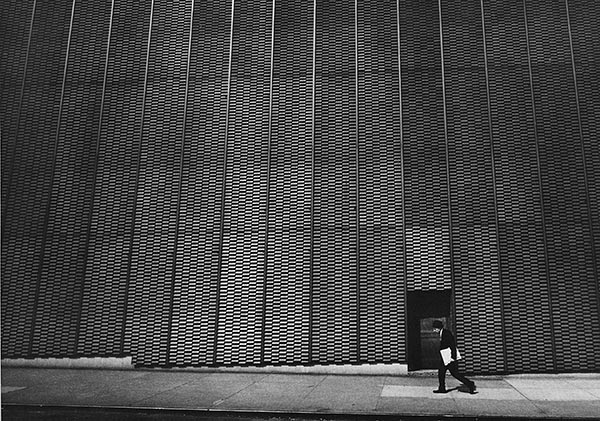 Charles Gatewood, untitled, New York, 1975, from the Wall Street series
So we have pictures of the Wall Street walkers, the darkness of the afternoon, and desolate streets. It's street photography with an strong emphasis on form and mood.
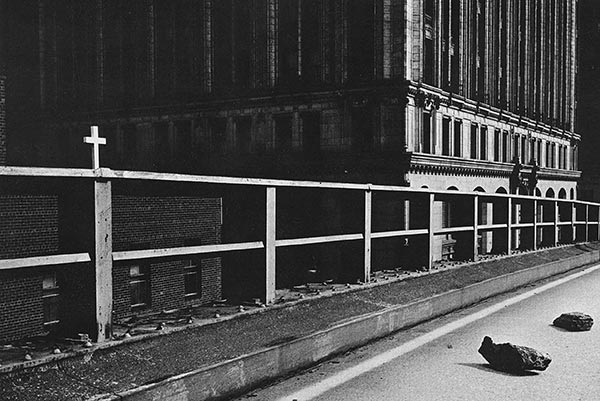 Charles Gatewood, untitled, New York, 1975, from the Wall Street series
Gatewood used Kodak Pan-X, which is a very slow black and white film. He used it for more contrast. If you shoot in the street the shadow background gets dark in a nicer way. And you just get the person with a black background. He would let the background go as black as possible.
December 9, 2013
Florence Henri's mirrors
In 1927 (at age 34), Henri enrolled as a non-matriculating student at the Bauhaus in Dessau, where she studied photography for the first time with László Moholy-Nagy, developing a close friendship with Lucia Moholy, who strongly encouraged Henri’s experimentation with the camera.
In early 1928, Florence Henri abandoned painting and from then on focused on photography, with which she established herself as a professional freelance photographer with her own studio in Paris – despite being self-taught. Mirrors become the most important feature in Henri’s first photographs. She used them both for most of her self-dramatizations and also for portraits of friends, as well as for commercial shots.
 Florence Henri, Selbstportrait, 1928, Gelatin silver print
She was an experimental photographer who explored extreme perpective views, multiple exposures, photograms, and photomontages. In addition to portraits of well-known figures of the Paris cultural scene, she also did anonymous portraits ("Portrait Compositions"), many self-portraits, and so-called "Mirror Compositions", which occupy a central place in her body of artistic work.
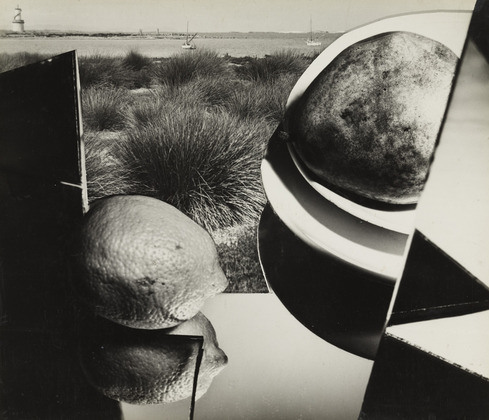 Florence Henri, Abstraite Composition, 1932
Henri’s manipulation of mirrors, prisms, and reflective objects to frame, isolate, double, and otherwise interact with her subjects–one of the most distinctive and adventurous features of her photographic work–often confounds viewers’ ability to distinguish between reality and reflection.
Between 1928 and the late 1930s, Henri produced the work for which she is best known, including her mirror compositions, participating in the Film und Foto exhibition in Stuttgart in 1929. She opened a successful studio in Paris and took on advertising projects to supplement her income, continuing to feature mirrors and utilize photographic techniques promoted at the Bauhaus in her professional work.
December 8, 2013
William Christenberry: photography + memory
William Christenberry picked up the Brownie camera to make color prints as references for his paintings of the American South. His series of his color Brownie snapshots that had been tacked to the wall were seen by William Eggleston in 1962. They encouraged Eggleston to make the shift from black-and-white photography to colour.
Christenberry was encouraged by Lee Friedlander to experiment with a large-format view camera in the early 1970s.
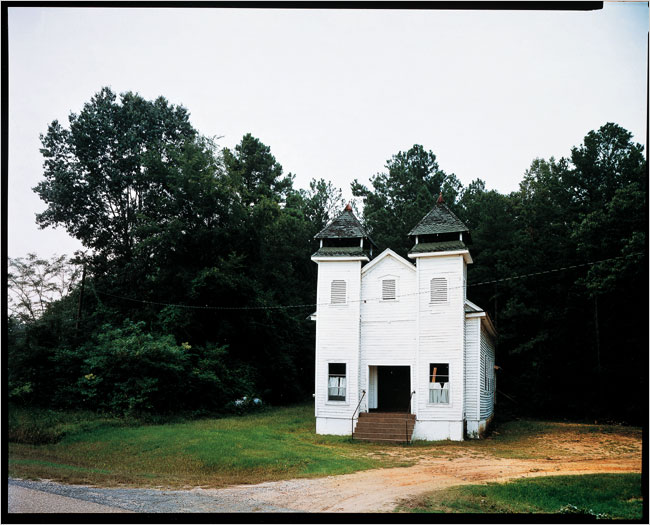 William Christenberry, Spott Church, Alabama, 1981.
His photographs are grounded on memory of a disappearing American south mainly through his fascination with the churches and houses of Alabama. Many of these were weatherbeaten and neglected when he photographed them, and they are now gone.
December 7, 2013
Bryan Schutmaat's American West: people
Bryan Schutmaat’s series “Grays the Mountain Sends” is a constellation of fading mining towns in and around the Rocky Mountains constructed from still lifes, portraiture and landscapes.
 Bryan Schutmaat, untitled portrait, from Grays the Mountain Sends
Schutmaat calls the project “a meditation on small-town life, the landscape and more importantly, the inner landscapes of common men.”
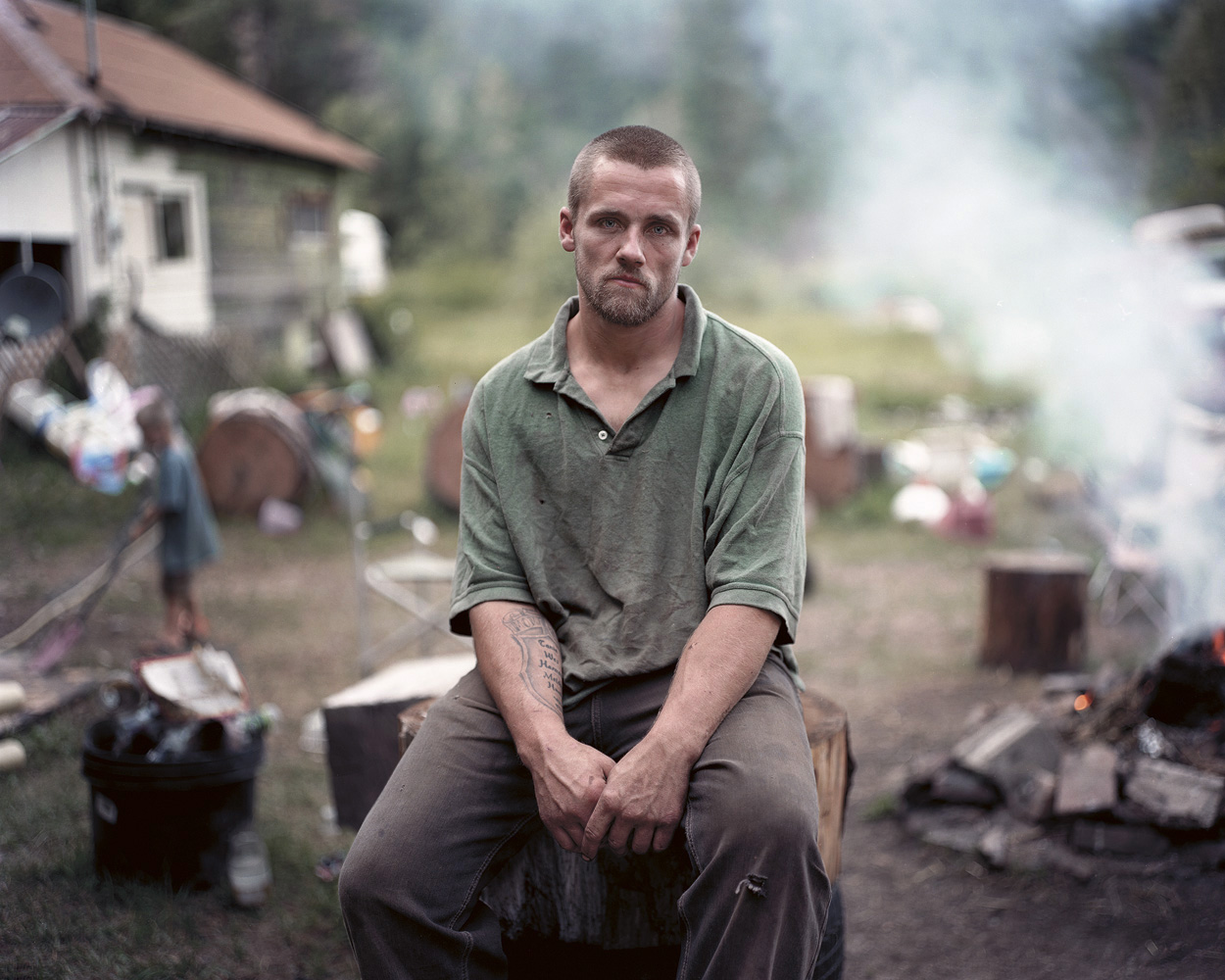 Bryan Schutmaat, untitled portrait, from Grays the Mountain Sends
The American Dream has faded into history and the myth of the Manifest Destiny for these miners. The past weighs on the present almost to the point of haunting.
December 6, 2013
Travels along the River
In 2012, four photographers—Stu Levy, Phil Straus, Rita Swinford,and Jasmine Swope—traveled along the Colorado River in a raft from Lees Ferry to Diamond Creek, to photograph its geography and history through fine-art photography.
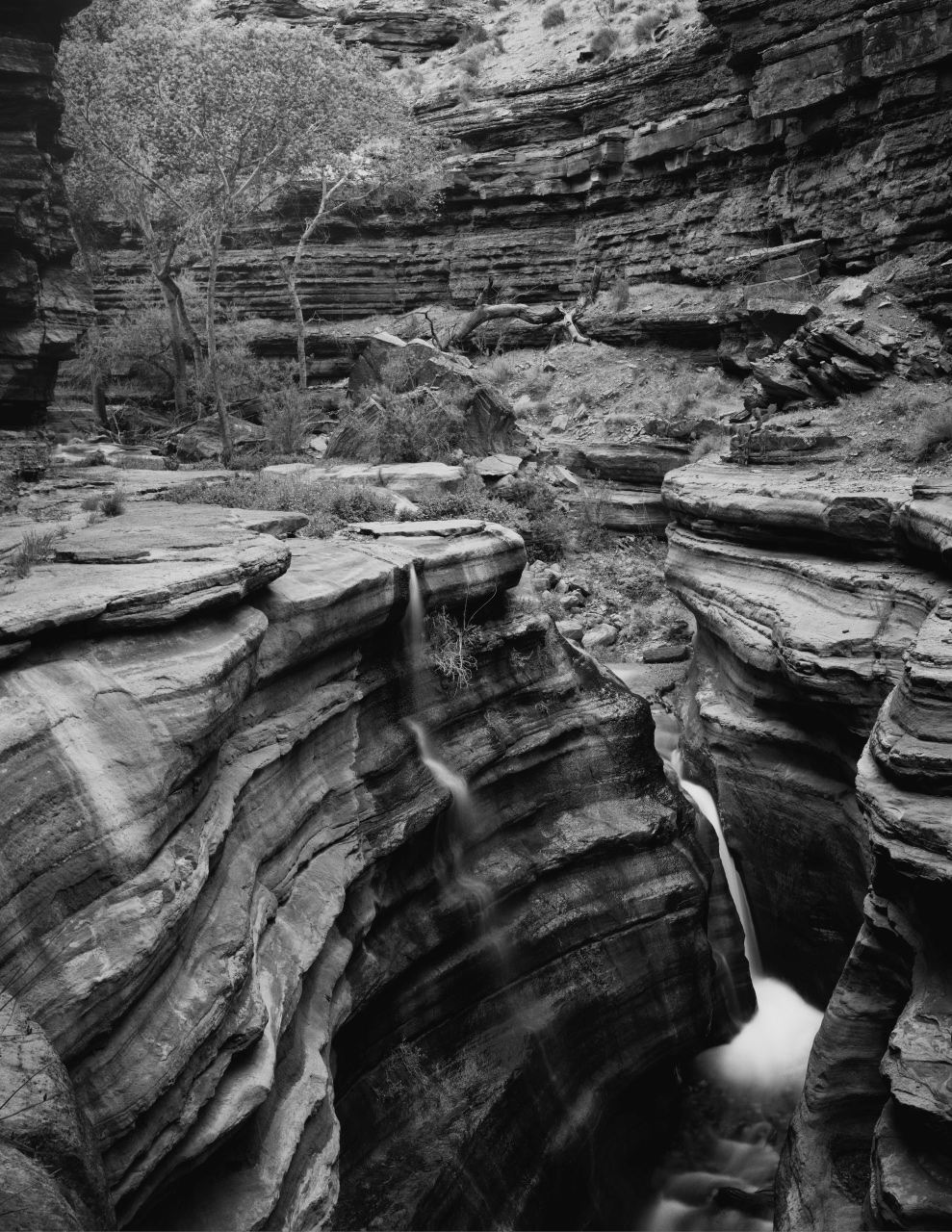 Jasmine Swope, Grand Canyon, from Travels along the River
Their work helped to support the Venice Arts’ Young Explorer campaig, which plans to send students in Venice Arts’ art mentoring program on a sponsored trip to the Grand Canyon. During the trip the students will have the chance to travel on the river and learn about an environment rich in picturesque landscapes, intriguing human history, world-famous geology, and fascinating plants and animals.