January 29, 2014
Claudia Terstappen: bush fire landscapes
Claudia Terstappen's Northern Territory landscapes are intriguing as they are about fire:
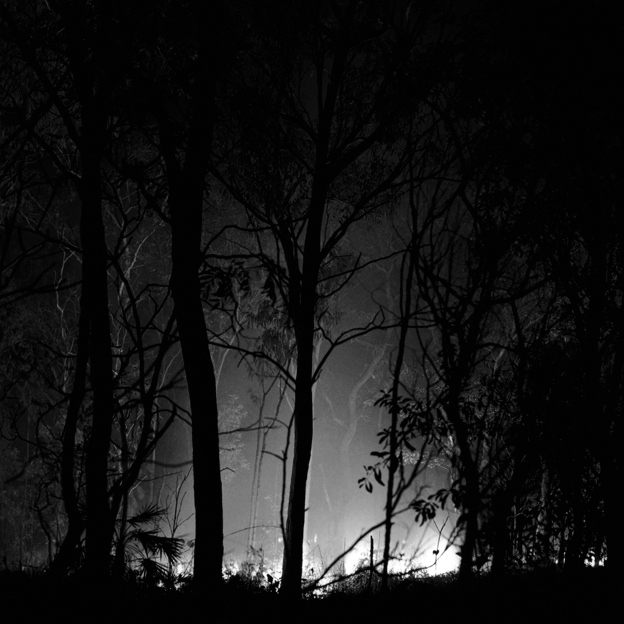 Claudia Terstappen, Bushfire III (Northern Territory, Australia), 2002, Bushfire III (Northern Territory, Australia)
2002, From the series Our ancestors 1990-
Claudia Terstappen, Bushfire III (Northern Territory, Australia), 2002, Bushfire III (Northern Territory, Australia)
2002, From the series Our ancestors 1990-
This is a landscape that is shaped by fire:
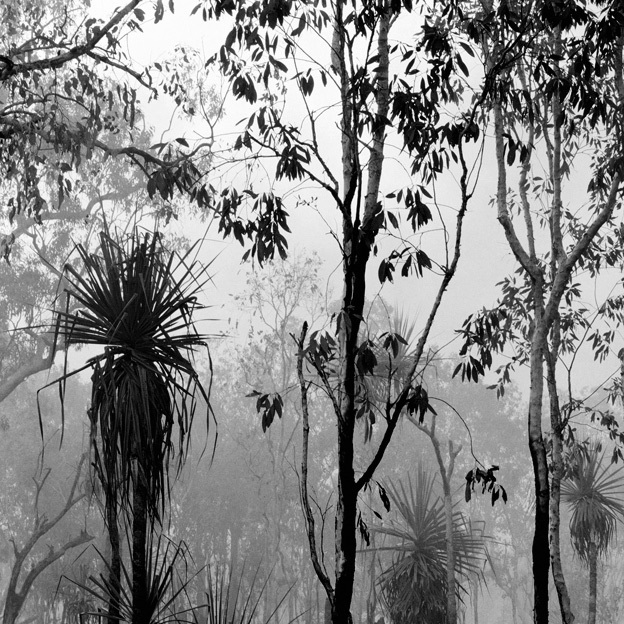 Claudia Terstappen, After the fire (Northern Territory, Australia), 2002, From the series Our ancestors 1990-
These pictures are less about the light and more about the darkness of light.
January 27, 2014
John Davies: the shock of the old
John Davies is known for his north of England landscapes.and the industrialisation of space. Those made between 1979 and 2005 show the complex scenery of post industrial and industrial Britain. He is widely regarded as Britain's leading landscape photographer, and has spent 30 years photographing the industrial and post-industrial landscapes of Britain.
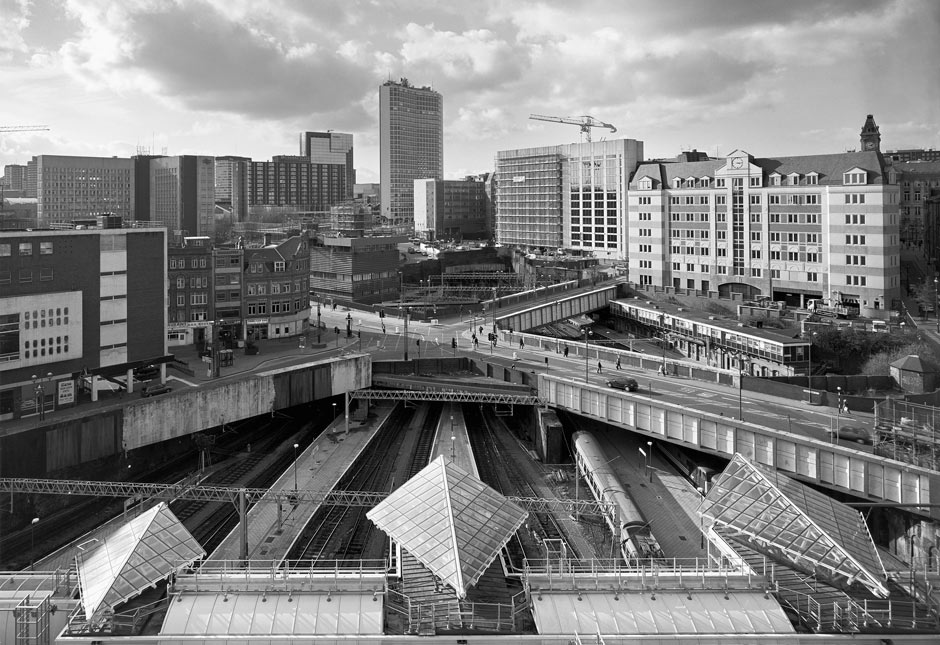 John Davies, New Street Station, Birmingham, 2000
Both landscape painting and photography are underpinned by the ideal of the detached view, capturing the meaning of a place and a culture at a precise moment for ever. The assumption is the desire to see life clearly and to see it whole. Usually, the photographs are taken from an elevated position looking down.
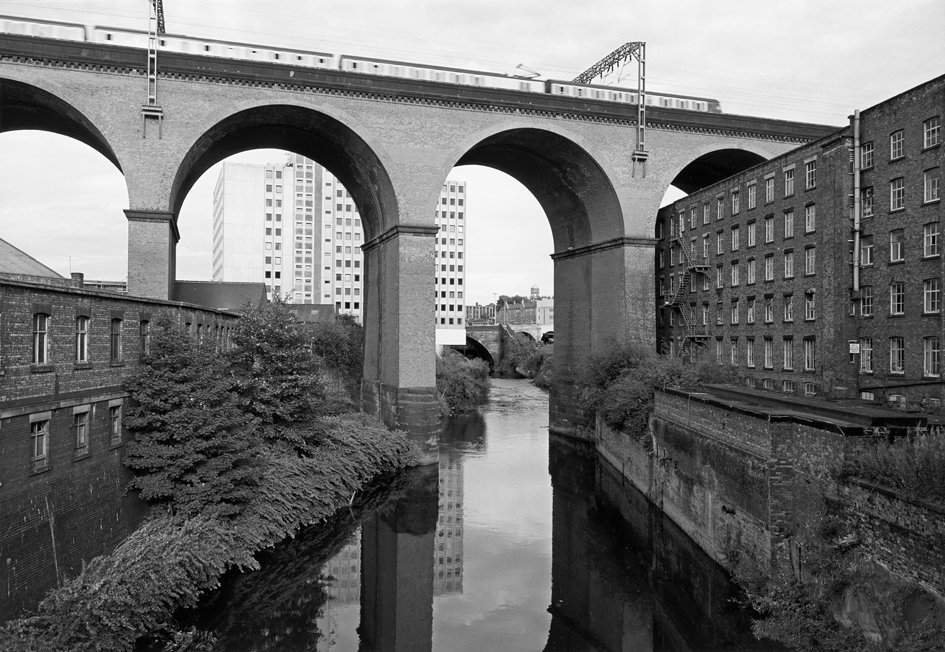 John Davies, Stockport Viaduct, 1986
Black and white photography seems to belong not just to another era, but to another world and it seems antiquated in an era of digital colour photography.
January 21, 2014
The Sundance Film Festival Portraits
Photographer Victoria Will wet plate (Tintypes) portraits made at The Sundance Film Festival of some of Hollywood's current film stars.
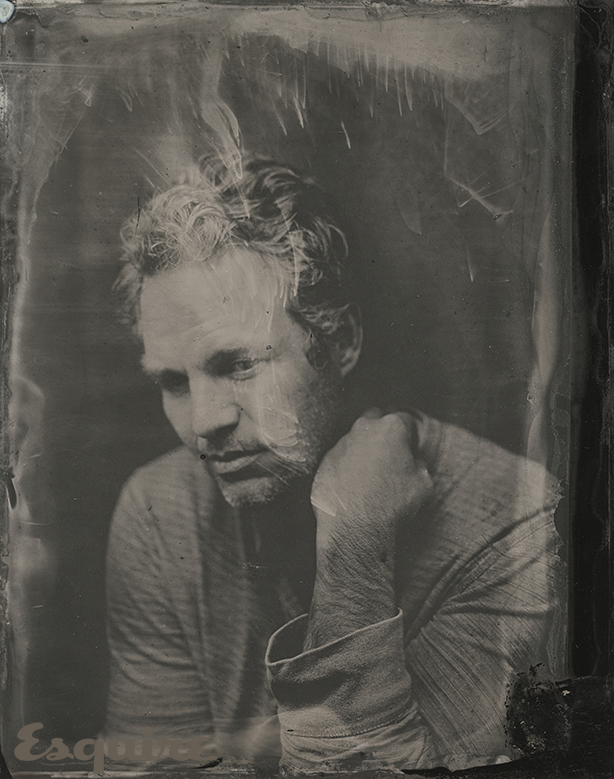 Victoria Will, Mark Ruffalo, Sundance portraits
The results are unpredictable because of the finicky nature of the chemistry but the process does suit portraiture:
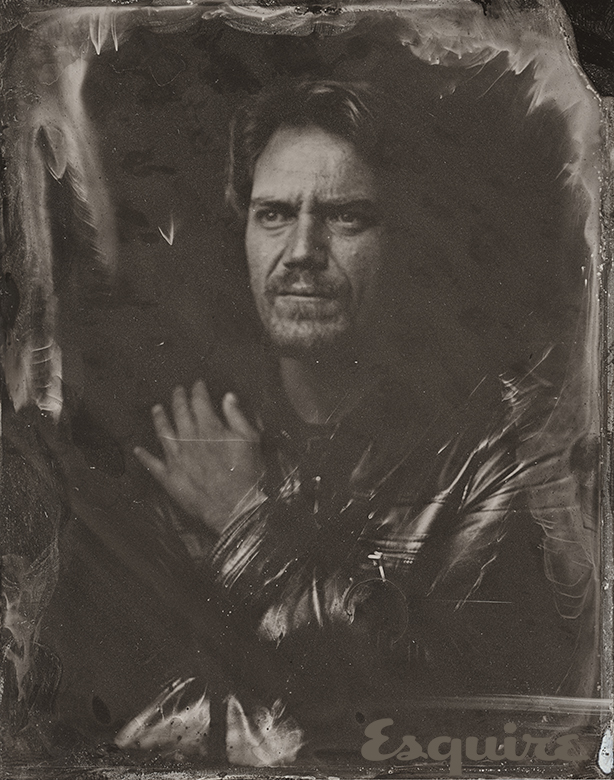 Victoria Will, Michael Shannon, Sundance portraits
The results can be quite haunting at times.
January 15, 2014
Claude Cahun: surrealism
Originally and most publicly a writer, Cahun rarely published and never exhibited her photographs which were not created, for the most part, for public consumption. Although recognised for her literary contribution in France, in the English-speaking world Cahun has come to be known primarily for her performative self portraits of the 1920s, in which she donned a range of costumes to play out a series of cross-gendered identities.
Her playacting amounts to a total rejection of identity—the self—for Cahun, is inherently multiple and mobile, recreated and reinvented from moment to moment, and gender is a mask which can be put on or taken off according to whim or necessity.
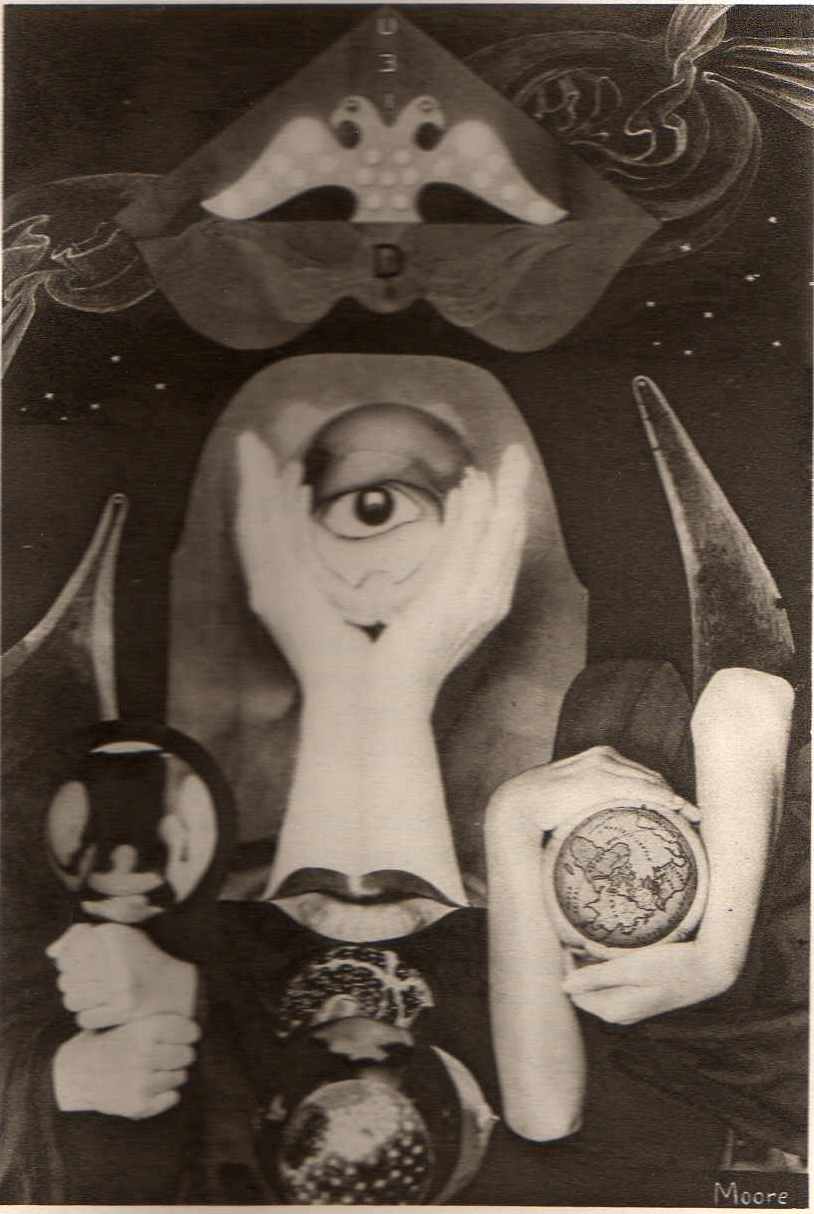 Claude Cahun, Confessions void Plate1, 1929-1930, silver gelatin print
However, during the 1930s, Cahun produced a less known body of work, including photographs and objects, relating to the surrealist object. Conceptualised in 1931 by the surrealists Salvador Dalí (1904-89) and André Breton (1896-1966) as an avant-garde art form transcending the formal concerns of modernism and at the same time refusing the traditional craft skills of the artist celebrated by the Communist party with whom the surrealist group was at first linked, the surrealist object was typically an assemblage made from unusual juxtapositions of ordinary things.
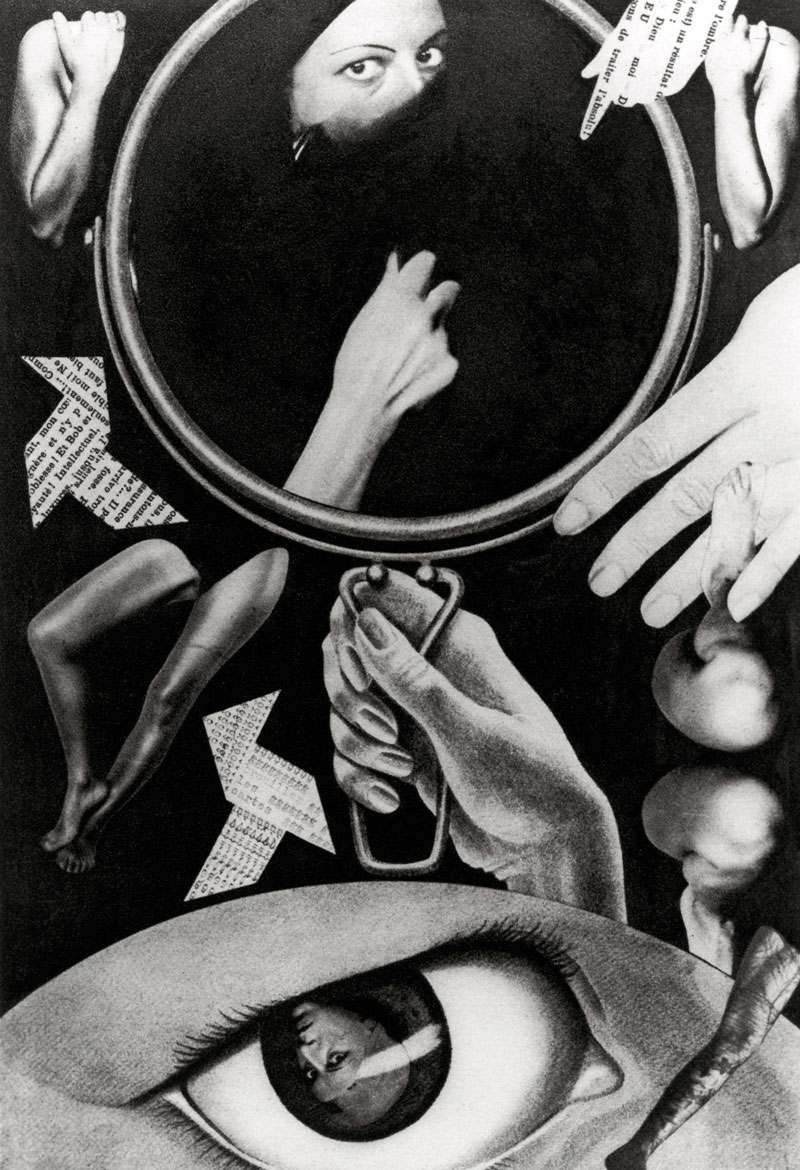 Claude Cahun, Confessions void Plate 2, 1929-1930, silver gelatin print
Cahun participated regularly in surrealist demonstrations, strategy meetings, publications, and exhibitions during this period, while Moore remained active behind the scenes. The puppets and surrealist objects that Cahun produced and photographed during the 1930s negotiated between the theater of political opposition and the theater of dreams, the psyche and the revolution, the two poles, in other words, of surrealist practice.
January 14, 2014
Francesca Woodman: self, femininity and photography
Francesca Woodman was an America photographer who lived from 1958 until 1981. Her interest was in female subjectivity, seriality, Conceptualist practice, and photography’s relationship to both literature and performance. Though she experimented with various types of camera and formats of film while working, many of her pictures were made using a camera of medium format.
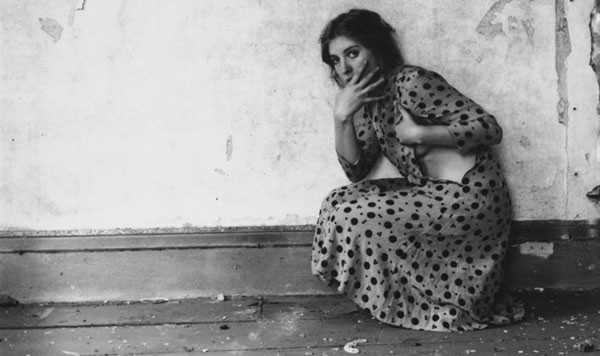 Francesca Woodman, untitled, From Polka Dots series, Providence, Rhode Island, 1975—1978, Gelatin silver estate print.
While attending the Rhode Island School of Design, Woodman lived and worked in an old industrial space that served as a setting for both her photos and her performative personality. She traveled to Rome independently to study art for a year. Woodman was also deeply interested in the Surrealist movement and neo-Pictorialism—as seen in the work of fashion photographer Deborah Turbeville—and both movements are evident in the abstraction, motifs, and ghostly air of Woodman's work.
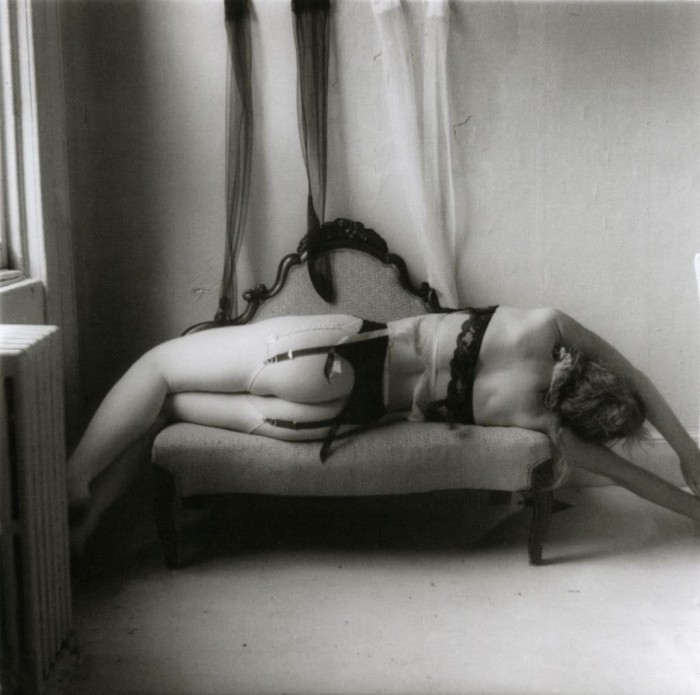 Francesca Woodman, untitled, New York 1979.
Since her suicide in 1981, her work has been remarkably acknowledged by the contemporary art world especially, the late photographer’s black and white images of young women often expressing through nudity. Some of her photographs were shot with long exposure and slow shutter speed. Among the photos, are self portraits as well however her face is mostly obstructed often with sporadic presence of men.
Woodman’s photographs were often devoid of specificity of place or time. Woodman may be dressed in vintage clothing or not dressed at all and the spaces in the photographs are often bare, ruined or sparsely furnished. The images almost always include Woodman and her self-portraiture led to a body of work that was thematically linked by her struggle with her own identity.
Her images open up questions in regard to the gaze, the spectator/subject and discussions on fetishism and objectification of the body, particularly a woman’s body
January 13, 2014
picturing the cosmos
This composite image is from NASA's Dawn mission and it shows the flow of material inside and outside a crater called Aelia on the giant asteroid Vesta. The area is around 14 degrees south latitude. The images that went into this composite were obtained by Dawn's framing camera from September to October 2011.
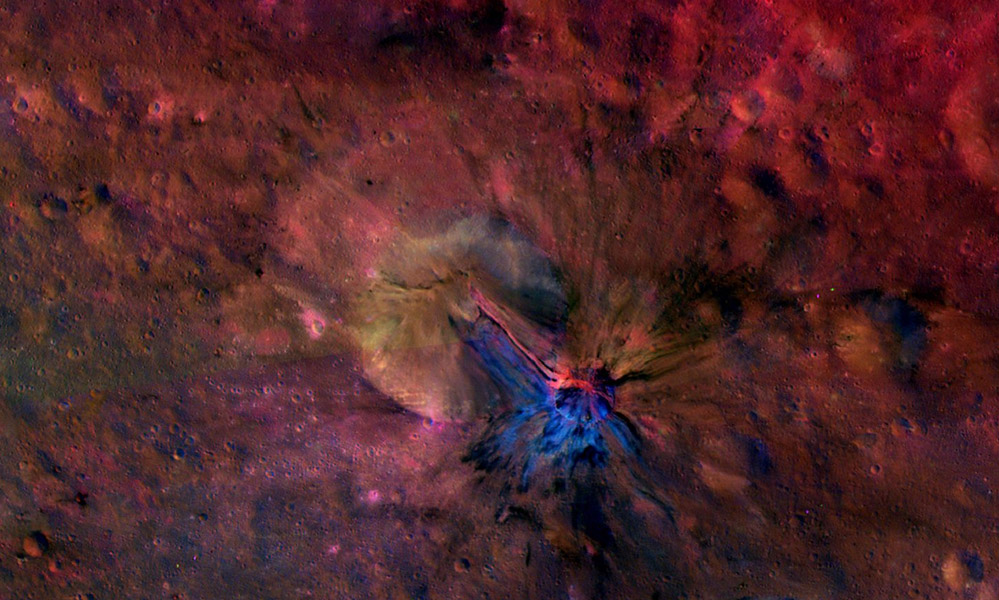 NASA, Aelia crater, asteroid Vesta, Dawn Mission
To the naked eye, these structures would not be seen. But here, they stand out in blue and red. The crater has a diameter of 2.7 miles (4.3 kilometers). The exact origin of the flow structures is unknown. A possible explanation is that the impact that produced the crater could have created liquid material with different minerals than the surroundings.
January 8, 2014
acquisition's in the tech industry: iPhoneography
I hate this. A small company develops good software, gets bought out by a giant tech company, and the software is taken off the market. A case in point is the KitCam app for the iPhone made by GhostBird Software. It is an iPhone camera app that augments apple’s built-in camera. It is reviewed here by S2art. It was a top-of-the-line Camera replacement app with a myriad of functions that only a few other apps could match.
Ghostbird has been acquired by Yahoo in mid-2013 and the app--along with Ghostbird's Photoforge2 has been taken off the App Store! So I cannot buy it. PhotoForge (and later PhotoForge2) were among the best image editors for iPhone and iPad, period.
KitCam was an excellent, powerful, and popular camera replacement app with an excellent set of tools, filters and a powerful built-in image editing module. It was a great app that combined the best features of ProCamera, Camera+, Hipstamatic, Instagram, PhotoForge and a number of others. -
Yahoo wants the GhostBird resources to focus on Flickr. I doubt that we will see a new Flickr app with all of those app’s capabilities since Yahoo! is looking to widen its base with casual users. So we’re likely to see some of the cool stuff from KitCam and PhotoForge, but not all of it in future iterations of Flickr--- not the good features for iPhoneographers.
I'm left with the standard iPhone Camera. Do I turn to Pro Camera 7?