February 12, 2014
Craig Tuffin + wet plate photography
There is an upcoming Wet Plate Collodion Gathering in Australia, which is designed for both novices and those more practiced at using this antiquarian technique at Gold Street Studios, Trentham, Victoria. It is run by Craig Tuffin.
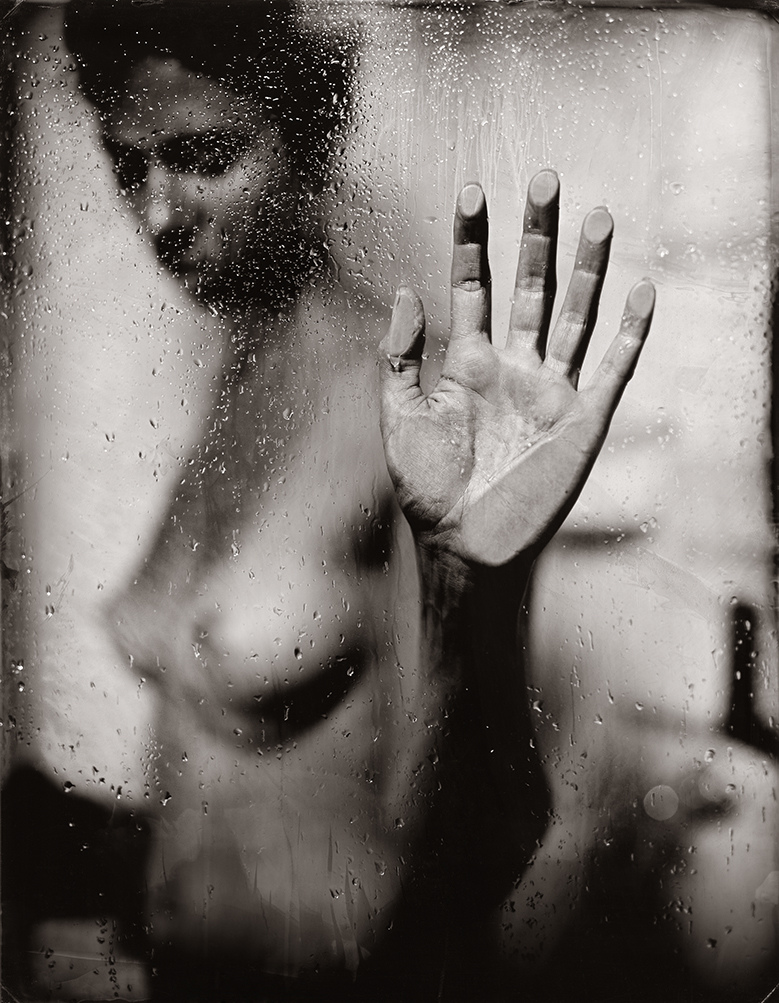 Craig Tuffin, The Separation of Eve', 2012, 11"x14" Clear Glass Ambrotype
Tuffin's image is part of the 'As Faulty As We Are’ series, which is an ongoing project of contemporary portraits using the historic photographic medium of Wet-Plate Collodion (ambrotypes and tintypes). Using this method allows the photographic artist to embrace imperfection as an integral part of the artistic process.
February 1, 2014
Richard Stringer: Queensland architecture
Richard Stringer has spent a lifetime photographing Queensland’s built environment, both modern and historic, in Brisbane and throughout the state. He is the author of Vanishing Queensland, a body of monochromatic photographs of the old buildings in Queensland.
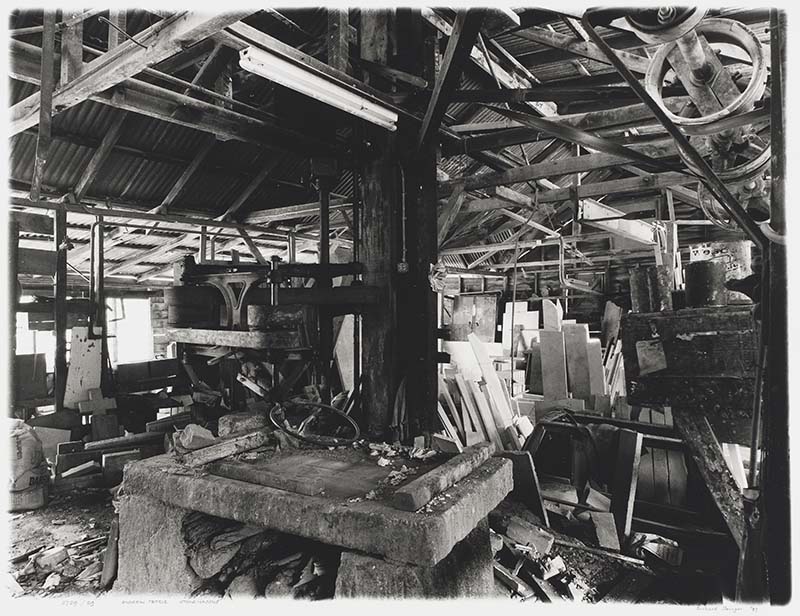 Richard Stringer, Andrew Petrie stonemasons, 1980, printed 1987, Gelatin silver photograph
He says:
I was keen to capture the sometimes ephemeral beauty of Queensland’s heritage. Time and progress keep moving and I soon discovered with some of my favourite structures that all that remained were my photos, so I was prompted to adopt a medium that recorded as much as possible i.e. large format sheet film where you can control perspective and count every brick. My aim became to examine my subjects dispassionately, to identify their characteristics, record them faithfully and present them to people and allow them to make up their own minds.
His photographs express the sense of place and memory and avoid the tendency of contemporary architectural photography and magazines to idealize the architecture.
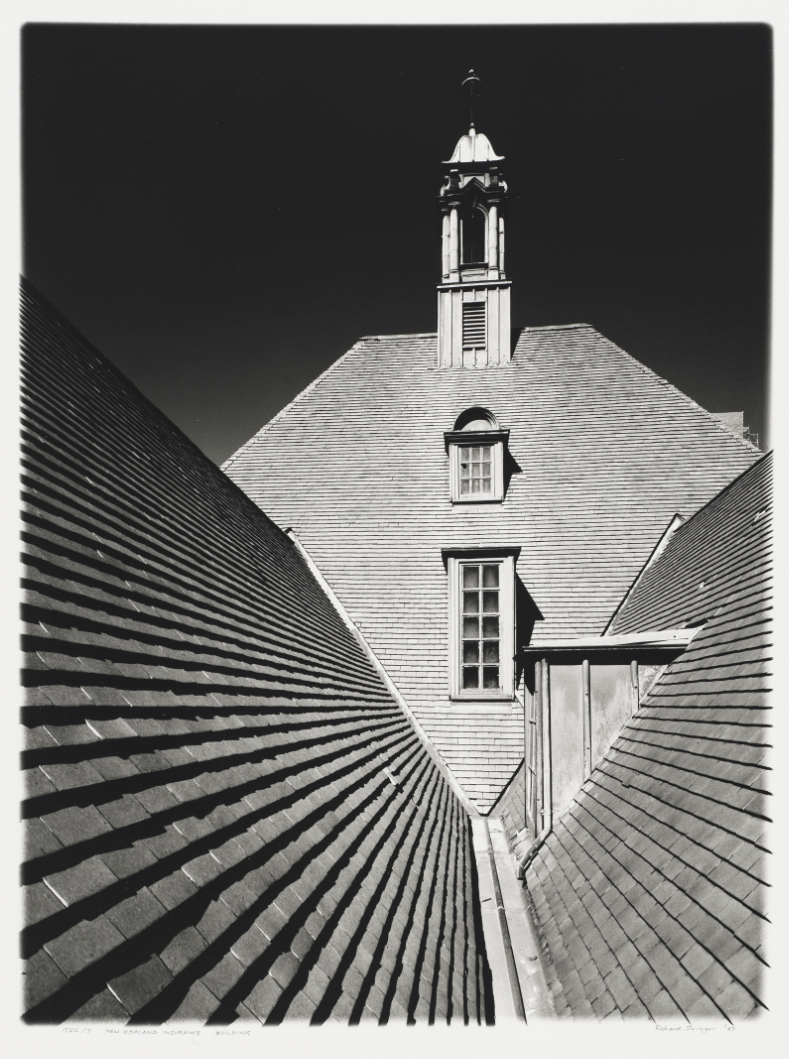 Richard Stringer, New Zealand Insurance Building; 1971, printed 1987, Gelatin silver photograph
The beaten-up buildings of early Australia endure as a nineteenth-century version of Critical Regionalism (if you like). This was a European model adapted to the local climate and the local lousy budget.
In the 1960s when Australian architectural photography was still comparatively young, the leaders were Max Dupain, David Moore,Wolfgang Sievers, Richard Stringer and Fritz Kos. This handful established standards for the photography of Australian architecture for the 1960s and beyond. Their work appeared frequently in Architecture Australia and its predecessors, and thereby became well known to the broad architectural profession.