October 31, 2013
a bleak landscape
This image by Joshua Dudley Greer is from his Somewhere Along the Line series
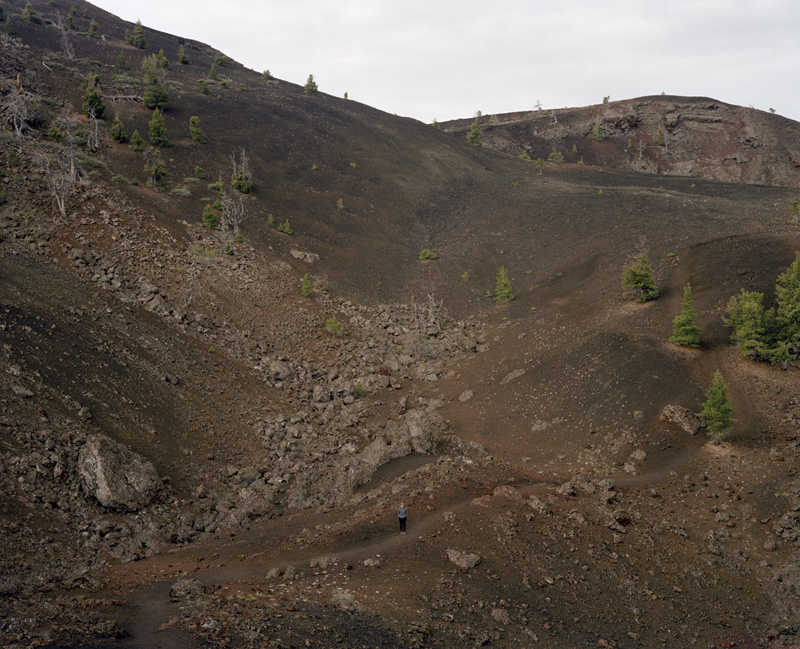 Joshua Dudley Greer, Craters of the Moon, Idaho, 2011
An image of mine tailings? Was it another example of mining company coming to Idaho with the promise of jobs and a semblance of security only to leave (taking jobs with them) a wake of environmental destruction? I
n the case of southern West Virginia, what was hidden beneath the surface was coal and it has been extracted in the most violent of means, often using TNT, and then left flattened, forever altered.
October 30, 2013
a digital world
In 1995 the Internet was often seen as a playground suitable for youthful cavorting, not a place for serious grownups, especially not serious grownups with business aspirations.
Paul Krugman observed in 1998:
The growth of the Internet will slow drastically [as it] becomes apparent [that] most people have nothing to say to each other. By 2005 or so, it will become clear that the Internet’s impact on the economy has been no greater than the fax machine’s…. Ten years from now the phrase information economy will sound silly.
Krugman was dead wrong. What has emerged is a new information economy, a digital world. Internet activities, which now include online banking, social media, web browsing, shopping, e-mailing, and music and movie streaming, generate tremendous amounts of data, while the Internet itself, through digitization and cloud computing, enables the storage and manipulation of complex and extensive data sets.
This data is a new kind of raw material that can be extracted by data analysis and data mining. Diagnosis is one thing, correlation something else, prediction yet another order of magnitude. So while we are having fun with our online connectivity we are happily and willingly helped to create the greatest surveillance system ever imagined, a web whose strings give governments and businesses countless threads to pull, which makes us…targets for spooks and advertisers.
October 29, 2013
the architecture of war
Donovan Wylie's Outposts book shows a core idea of modern warfare that transgresses of nationality or politics – it is to take the high ground and use vision as a method of strength and protection:
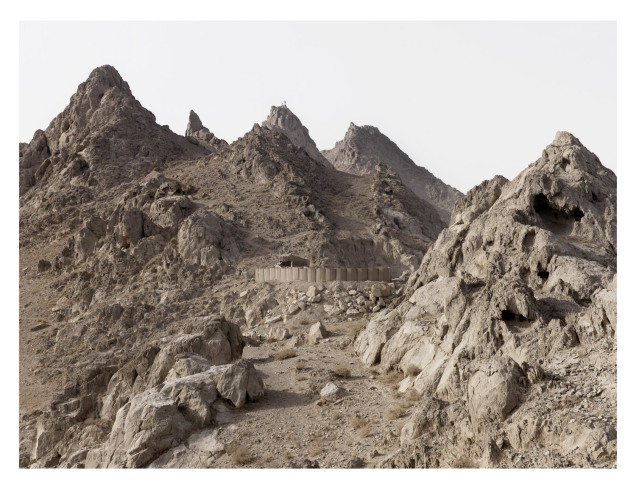 Donovan Wylie, Mountain Position, Mas sum Ghar, Kandahar Province, Afghanistan, 2011.
These outposts are built on natural promontories with multiple lines of sight, and formed a protective visual architecture. They are frequently positioned on defensive locations established during earlier conflicts and represent reincarnations of past histories under new powers. These images show jagged mountain ranges overlooking vast desert plains. The images of the architecture of conflict are about surveillance, territory, control, and power.
October 25, 2013
fire
Jane Fulton Alt's work in The Burn---a series of images of a controlled prairie burn---take on an added significance in the light of the recent bushfires in NSW, Australia.
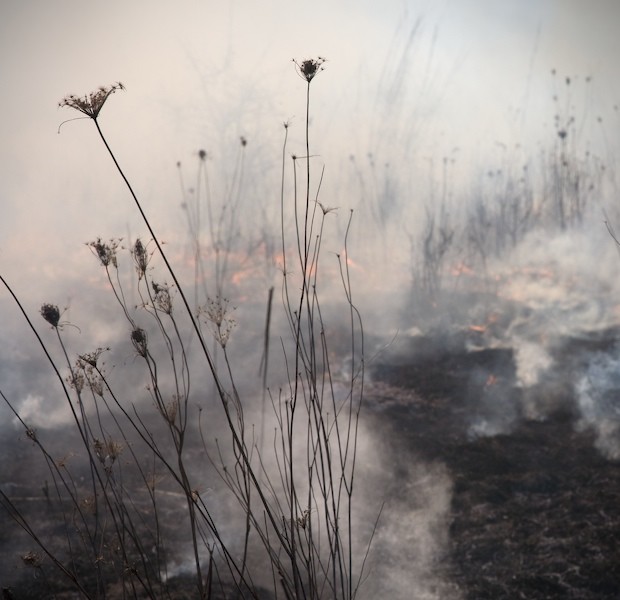 Jane Fulton Alt, untitled, The Burn, 2007
Alt says that:
A controlled burn is deliberately set; its violent, destructive force reduces invasive vegetation so that native plants can continue to prosper. The elements of the burn—the mysterious luminosity, the smoke that both obscures and reveals—suggest a liminal space, a zone of ambiguity where destruction merges with renewal.
For those living living in Australia these same photographs also speak to a much darker narrative, that of the wild bush fires. Uncontrolled wild fires can quickly become savagely destructive, literally destroying hundreds of homes in one fire season. Even when control fires are needed, like those photographed by Alt, these have not always burned as planned, if they get out of control they can burned thousands of acres and a few homes.
October 20, 2013
large format photography: Janelle Lynch
Janelle Lynch is a large-format (8x10) photographer and writer in New York City who teaches at the International Center of Photography She writes for for photo-eye, The Photo Review, and Afterimage.
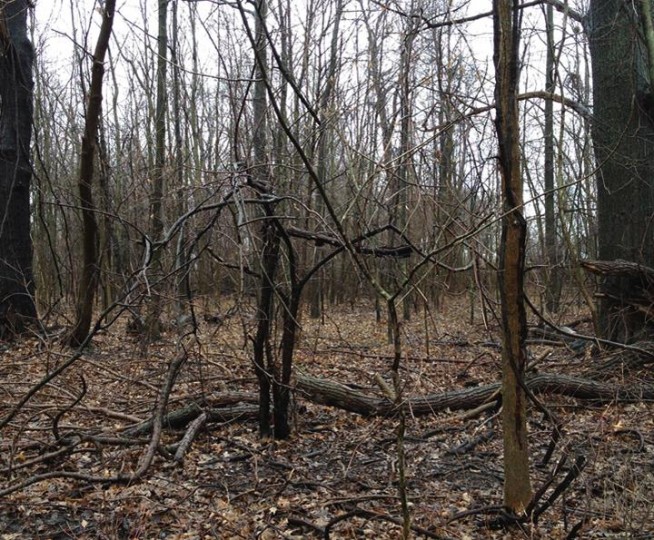 Janelle Lynch, Untitled, 2013
Her first monograph, Los Jardines de México, was published by Radius Books in 2011. It features work made whilst she was living in Mexico Her second monograph Barcelona was published by Radius Books in 2013 and it features work made whilst living in Spain.
It was in the early Mexico work that Lynch shifted from 6x7cm format camera, to a 4×5 inch camera, and then to an 8x10 camera.
October 15, 2013
the turn to caffenol
The reaction against digital photography continues to gather momentum.
An example is Lumen Magazine run by Gabriel Van Ingen based in Nottingham in the UK. He has made the turn to using alternative/historical processes including caffenol, which is popular with analogue b/w film enthusiasts due to its versatility, non-toxic compounds, and unique environmentally friendly footprint.
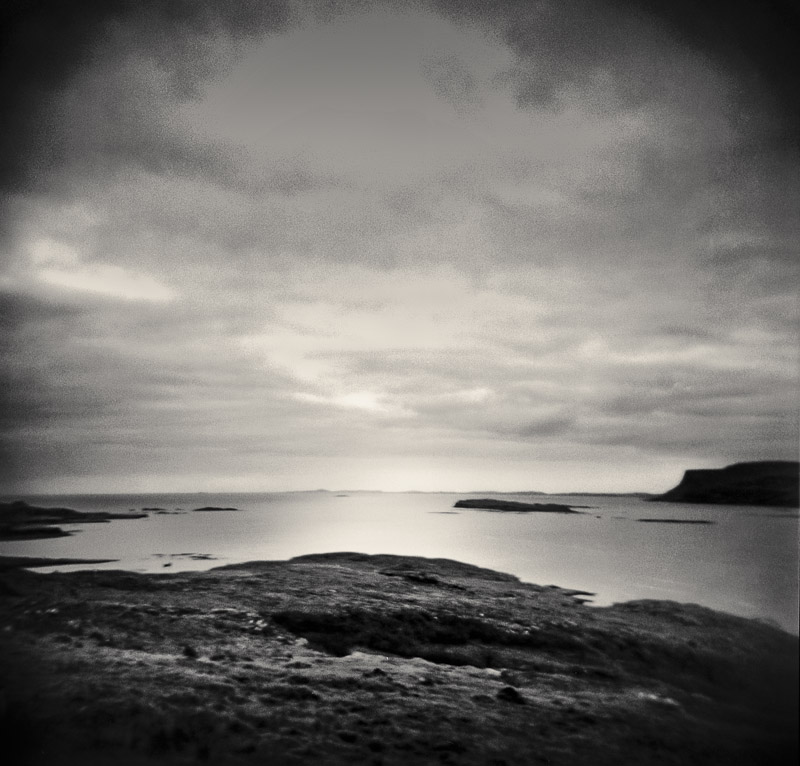 Gabriel Van Ingen, untitled, landscape
He outlines his way of working thus:
With wet plate collodion I can make a glass negative with the plate camera or the 10×8 using the wet plate collodion process. Once I have dried the plate I can then contact print onto fibre based paper and develop it in caffenol. With the Platinum printing process I shoot large format 10×8 negatives and develop them in Caffenol. Then I contact print those to make Platinum prints which have the most amazing tones and detail.
This turn to caffenol is happening in Adelaide with Port Adelaide based photographers Tony Kearney and Danica Gacesa McLean's Mug Shot series.