March 26, 2013
life on the urban fringe
The Ministerial Advisory Committee for the Melbourne Metropolitan Strategy has published Melbourne - Lets talk about the future" and it raises the issues of two Melbournes: an inner core of opportunity and vibrancy, and a massive outer ring of relative disadvantage and exclusion.
Roz Hansen, the chairperson of the Ministerial Advisory Committee, says that:
We have an increasing number of people who are living on the fringe who have gone there for affordable housing but in actual fact are suffering from a problem of affordable living. So whilst the housing package might have been quite tempting and affordable, they are finding that because they don't have access to basic community-building facilities - schools, GPs, reasonable shops and public transport in particular - they are having to rely on the car to get the kids to school and to be able to access a job, and undertake their daily activities. That is putting huge pressure on the household budget. We're starting to see more people in mortgage stress. We're starting to see more people actually defaulting on their deposits on land and house packages in fringe greenfield estates, and we're starting to see a slowdown in housing development on the fringe.All of these are warning signals that allowing us to grow further and further out, to actually perpetuate the sprawl, is creating an incredibly unaffordable, unsustainable and uncertain future.
Their strategies to address this are well known ones: slowing down the growth on the fringe and opening up and unlocking that capacity in the middle suburbs for jobs and housing density.
March 19, 2013
an emergent “artistic” approach to architectural imaging
Alan Rapp in Is architectural photography art photography? at Critical Terrain refers to the contemporary photographer, Tim Griffith, to make his point that today both architecture and photography are in their own states of disarray and redefinition, making their current fusion especially fluxy.
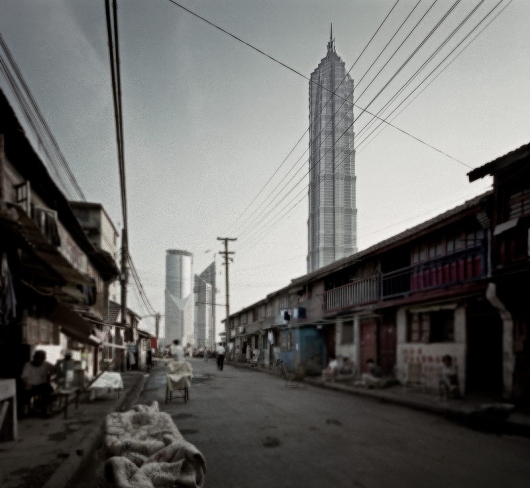 Tim Griffith, Ausstellung Babel Town in der Fotogalerie
Tim Griffith is seen as an example of the current practice of architectural photography evolving toward artistic effect; an example of the emergent “artistic” approach to architectural imaging and the shifting state of practice today.
Rapp says that:
Griffith presents the tensions inherent in this yoking of architecture and photography; his work is formed by professional rigor yet inflected toward art, hypertechnological in subject and approach, yet suggestive of an already fading moment....Griffith shows it is possible to attend the norms of conventional architecture photography while also subverting them, within the foursquare of the very image.
Griffith’s pictures can also be read as history and augury of architectural photography as a specialized practice.
March 10, 2013
Edward Weston: coastal studies
Remembering Edward Weston and his photographs around Point Lobos, California:
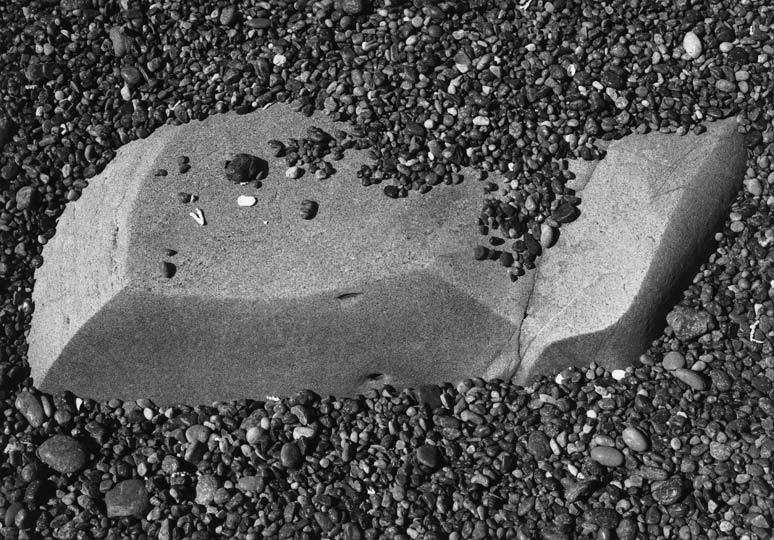 Edward Weston, Angular Roc, Pebbles, Weston beach, Point Lobos, 1948
His interest is patterns and natural forms aught the dramatic patterns of trees, rocks, pool and shore falomng this part of the California coast.