June 24, 2013
Murray Fredericks: early work
Prior to the Greenland and Lake Eyre projects Murray Fredericks produced three large volumes of work from the Himalayas, Patagonia Andes and Southwest Tasmania made over seven or eight years. These traditional and picturesque images were made on medium format cameras and an Hasselbald X-Pan.
 Murray Fredericks Iceberg, Antarctica
The SALT series---the Lake Eyre project consisted of 16 trips starting in 2003 -- was a complete departure from the mountain landscapes to vast empty space of Lake Eyre in central Australia. The bulk of the still images of Lake Eyre were shot on an 8-by-10-inch Toyo view camera. In the final year of the project Fredericks started experimenting with a medium format digital back on a digital view camera to employ stitching as a method of capturing a wider field of view.
Fredericks saw the flat and featureless Lake Eyre as empty visual space in which nothing happens. His photographs were minimalist landscapes with few familiar visual elements - except for an occasionally discernable horizon.
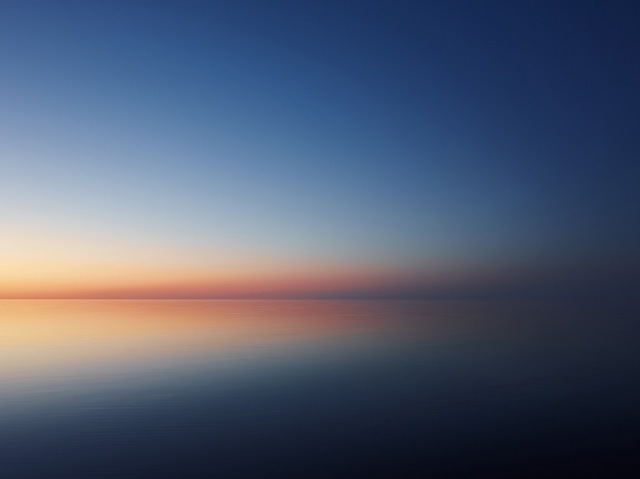 Murray Fredericks Lake Eyre, The Salt Series
In concentrating exclusively on space and colour Fredericks’ photographs reduce a landscape to its most elemental level ---allowing light, colour and form to construct the picture.
June 20, 2013
Jan Kempenaers: ruined monuments
Jan Kempenaers Spomenik's series shows these currently standing monuments as forlorn and forgotten in the countryside and the mountainous regions of the former Yugoslavia.
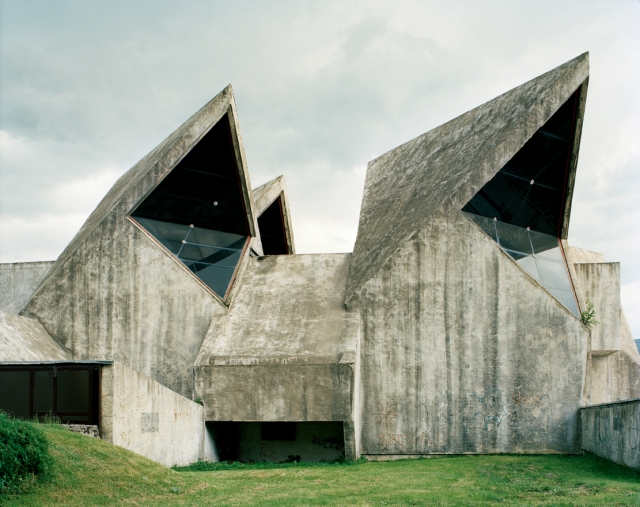 Jan Kempenaers, Spomenik #17 (Kolašin), 2009
The Spomeniks look more like sculptures in an open air museum than the usual war memorials full of military pathos and thundering cannons as were erected at Verdun or Stalingrad. The monuments have been the objects of blind fury, and now of indifference. What remains is pure sculpture in a desolate landscape.
June 18, 2013
the wet plate collodion photographic process
Wet plate collodion photographic process, which is used to make different image types, had thrived from the 1850s to the 1880s. The photograph is made not on paper but on a sheet of glass or metal and rather nasty chemicals including heavy metals and poisons are involved in the process.
The process has been re-surging of late and a number of workshops are offered at the Gold Street Studios in Melbourne and the Analogue Laboratory in Adelaide.
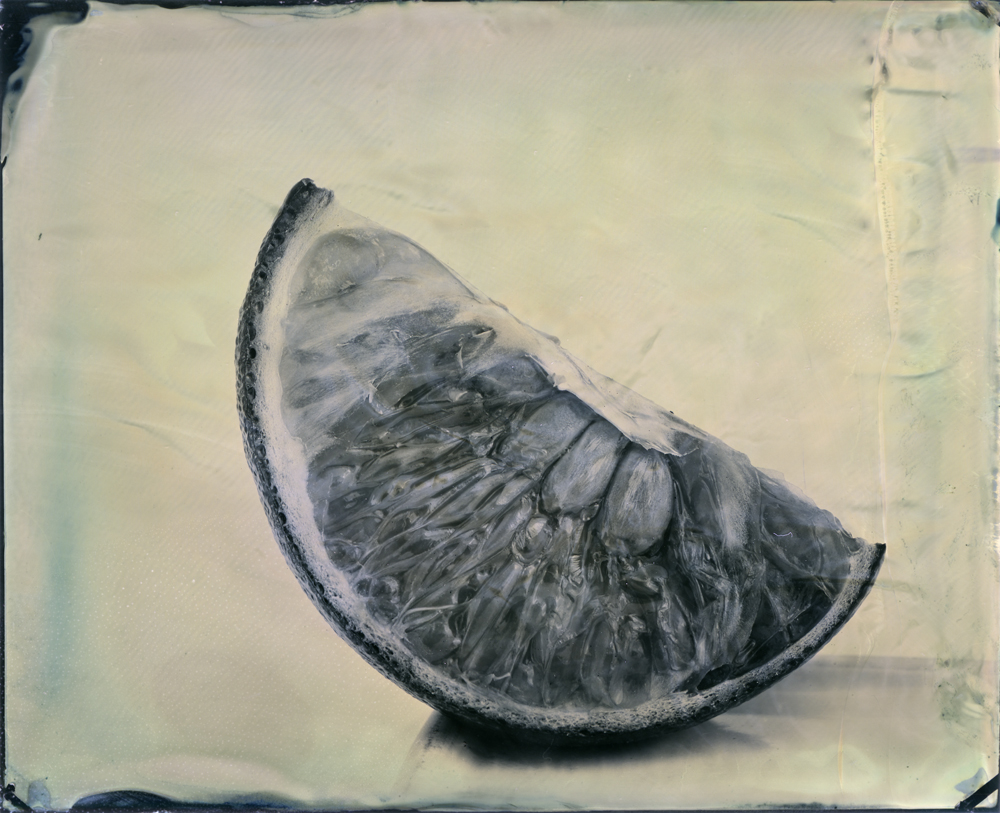 Denis Roussel, “Tangerine,” 2012. Archival digital print
Mark Voce says that to create a photograph using the wet plate collodion process:
we first have to pour a solution of collodion on to a sheet or plate of glass or black metal such as tin or aluminium, after a few seconds the collodion mixture starts to go tacky at this point the plate is placed into a tank of silver nitrate. The silver nitrate sticks to the collodion creating a light sensitive coating on the plate. From here on in the rest of the process takes place in the dark under a orange safelight.
He adds that the now sensitised plate is now loaded into the camera’s plate holder / dark slide and exposed.
Voce continues:
One of the disadvantages of the wet plate collodion process is the working time, from coating the plate you have just ten minutes to take the photo and develop the plate. T The plate is exposed just as with a normal sheet of film although it is much slower and is dependent upon the amount of infrared light on your subject. With the plate exposed it is developed by pouring a small amount of developer over its surface after a few seconds the plate is then fixed before being washed and left to dry.
He adds that the wet plate collodion negative is a beautiful object to hold and that it feels like a moment in time has been frozen, captured on to a sheet of glass or metal.
June 11, 2013
Mary McIntyre: the Veil series
Mary McIntyre holds that many people might consider the act of taking a photograph as something quick, immediate etc. or even easy, momentary etc. which is suggested even by the use of the word, ‘taking’, as in something that already exists and is merely taken.
However, to her the act of taking a photograph constitutes a different approach: it is not taking, but ‘making’ something. It is the construction of an image.
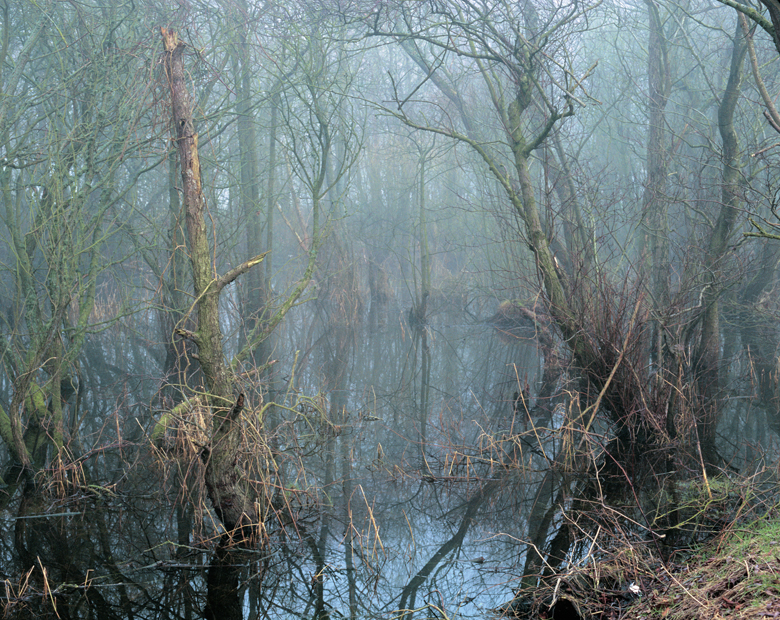 Mary McIntyre, Veil XV (2006) colour lightjet photographic print
This series appears to explore the neglected and dejected terrains, seeking out moments of odd grace and glanced beauty in settings that might customarily be considered ugly, uninspiring or of little value.
These are indeterminate territories where rural and urban converge in peculiar and sometimes fraught forms. Spaces such as hose at the barely visible borders of towns or cities, where fraying suburb begins to become entangled with the complicated patterning of the contemporary countryside.
June 1, 2013
Nicholas Nixon: urban views
Nicholas Nixon, early architectural views of Boston and New York were taken from rooftops in the mid-seventies and were exhibited at New Topographics: Photographs of a Man-Altered Landscape at the George Eastman House in 1975.
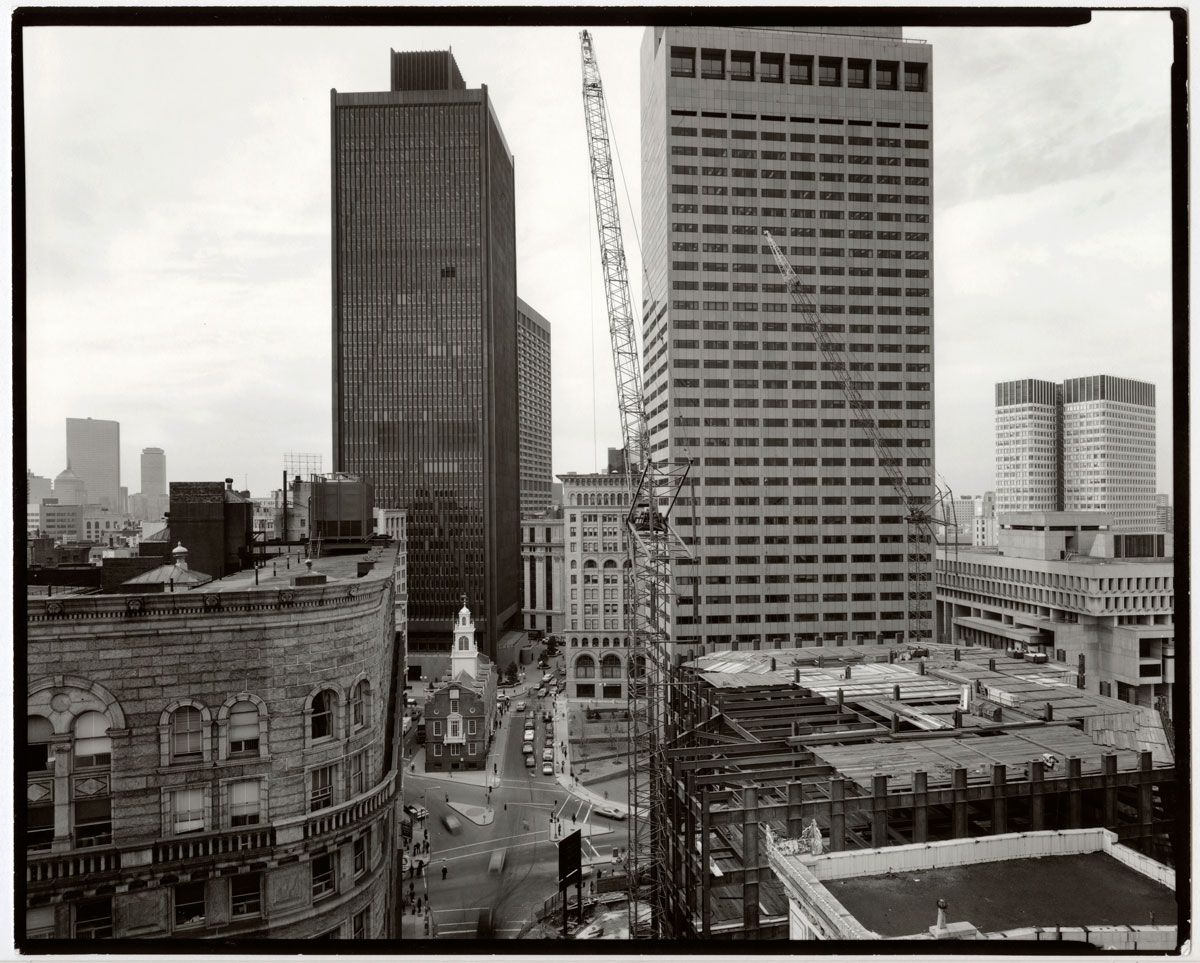 Nicholas Nixon, View of State Street, Boston, 1976, from the series Boston Views 1974 – 1976
Gelatin silver print, Baryt paper (card)
Nicholas Nixon, View of State Street, Boston, 1976, from the series Boston Views 1974 – 1976
Gelatin silver print, Baryt paper (card)
This is a great use of the the traditional (and by now archaic) tools of the medium - an 8x10 view camera, black-and-white film, contact prints when Boston was the city was in the process of transformation:
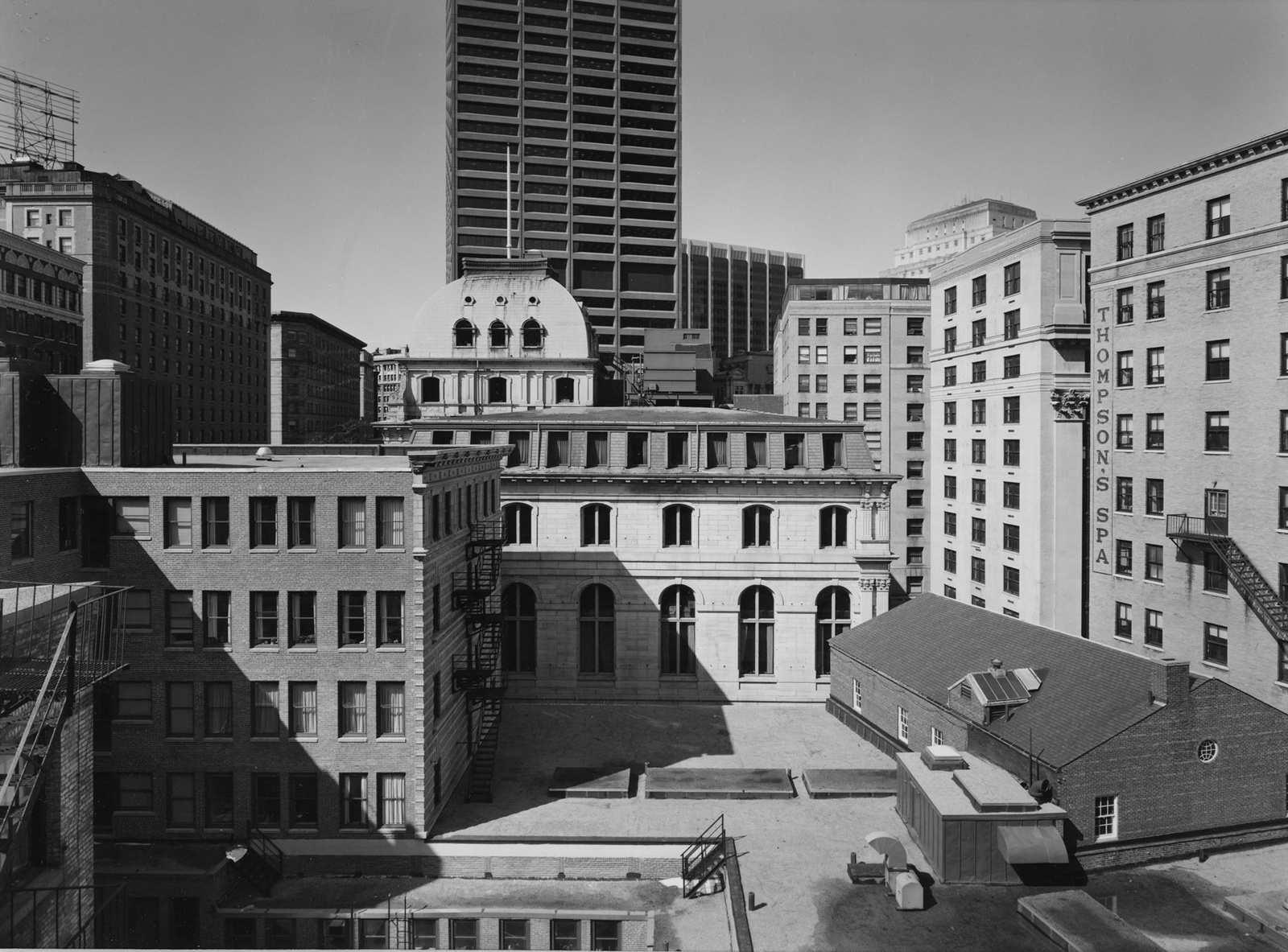 Nicholas Nixon, Buildings on Tremont Street, Boston, 1975; from the series Boston Views 1974 – 1976
Nixon returned to this subject matter to photograph Boston’s changing urban landscape during the Big Dig highway development project. He photographed first with an 8x10 view camera again; then with an 11x14 view camera.