November 11, 2011
UNSENSORED11
The Melbourne Silver Mine presents UNSENSORED11
an exhibition of analogue photography:
 Invitation photograph: Katherine White Piha, New Zealand, Polaroid
The opening night is Friday 25th November 2011 at the Collingwood Gallery 292 Smith Street, Collingwood, Melbourne. The exhibition features the work of 47 film based photographers who form a Melbourne based film collective and a Flickr group.
I shall be exhibiting this photo:
 Gary Sauer-Thompson, rock form, near Petrel Cove, Victor Harbor, South Australia
I hope you can make it to the show.
You can grab the large version of this invite here, please feel free to circulate it. This event is also listed on Facebook

November 10, 2011
Grateful Dead: So Many Roads
From the Grateful Dead's last show-- 7/9/95 @ Soldier Field in Chicago, Illinois. Jerry Garcia died exactly one month later of a heart attack, and the remaining members decided to disband soon after.
That was the end.
November 6, 2011
Grateful Dead: Scarlet Begonias into Fire on the Mountain
Scarlet Begonias into Fire on the Mountain by the Grateful Dead performed on December 27, 1983 in San Francisco, California
It is one of my favourite improvised sequences of music and this is a decent video. Jerry Garcia looks a bit of wreck though. He has lost his "liveliness" on stage and appears to have an unhealthy weight. The heroin is taking its toll? I understand that despite efforts to kick the drug habit during 1985, Garcia collapsed into a diabetic coma in July 1986. It was increasingly becoming a choice between the band or the drugs.
Garcia's physical decline affected the energy of the music and the band chemistry. The "endless tour" would not have helped. Garcia relapsed in 1990.
November 1, 2011
The White Ribbon
I watched a DVD of Michael Haneke's film White Ribbon over the weekend. The only other film I'd seen of his was Caché (2005).
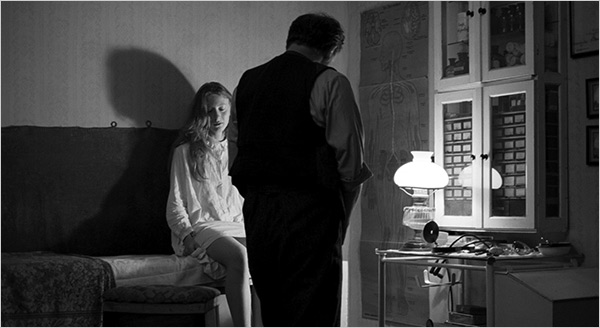 Roxane Duran and Rainer Bock in “ White Ribbon”
White Ribbon is set in 1913 and is a film that deals with a specific time and place. It deals with strange incidents in a small town in Northern Germany, depicting an authoritarian, patriarchal, Protestant world, where children are subjected to rigid rules and suffer harsh punishments, and where strange deaths occur. The narrative constructed by Haneke is centred around violence and is a “study of child abuse, class resentment, punitive, sexually repressive Protestantism and a gesture towards an incipient fascism.
The language is anachronistic; it evokes the rhythms and, partly, the milieu of 19th-century bourgeois realism, is concerned with malevolent children in pre-WWI Germany. Its an almost feudal system in which the local aristocracy and the church rule over the tenant farmers, men dominate women and children are treated as if they were their parents’ god-given property.
It echoes Ingmar Bergman through his stylistic use of black-and-white, with Haneke skilled at alienating (in the Brechtian sense) spectators by keeping them at bay, behind an opaque veil that is never lifted, while simultaneously involving them in the texture of the world he creates. The work of interpretation is left to the viewer.