
Mandy Martin, Puritjarra 2, 2005. If there are diverse kinds of knowledge and ways of knowing place, then we need to learn to value the different ways each of us sees a single place that is significant, but differently so, for each perspective.
|
|
looking for something firm in a world of chaotic flux
|
|
|
| Hiroshi Sugimoto's architecture series |
|
September 29, 2014 |
|
|
|
Hiroshi Sugimoto's series on iconic modernist architecture is structured around blurring the image. This was achieved by pushing his old 8x10 large-format camera’s focal length out to twice-infinity―with no stops on the bellows rail. The view then becomes an utter blur.
The landmarks of modern architecture have an enigmatic presence. The landmarks include Philippe Starck's Asahi Breweries, the Fujisawa Municipal Gymnasium by Fumihiko Maki, the United Nations Building by Wallace Harrison et. al., William van Alen's Chrysler Building, the Santelia Monument Como by Giuseppi Terragni, Minoru Yamasaki's World Trade Center, the Seagram Building by Ludwig Mies van der Rohe, E.U.R. San Pietro e Paolo by Marcello Piacentini and Antonio Gaudi's Casa Batlló II.
The blurred forms evoke the passage of time, muting the architectural details:
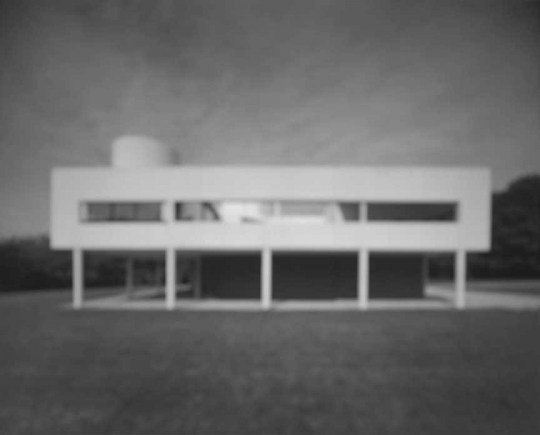 Hiroshi Sugimoto, Villa Savoye, Le Corbusier," 1998, Gelatin-silver print
In this series he is photographing huge-scale architecture, looking up from the ground level to develop a sense of seeing the building from the ground floor.
Continue reading "Hiroshi Sugimoto's architecture series" »
|
|
|
| | Posted by Gary Sauer-Thompson at 8:22 PM | Permalink |
|
|
|
|
|
|
|
| Dutch photography: Awoiska van der Molen |
|
September 27, 2014 |
|
|
|
Awoiska van der Molen is a Dutch photographer who remains rooted in the traditions of analogue black and white photography and hand printing in the darkroom using baryta paper. These remote landscapes loom out of the darkness:
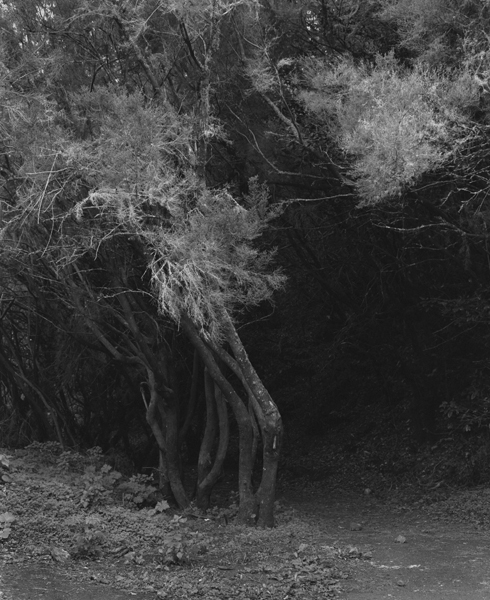 Awoiska van der Molen, tree, silver gelatin print,
The landscapes, sometimes taken during dusk or early morning, are made with long shutter speeds of almost fifteen minutes. Hence they are also about the experience of that long moment.
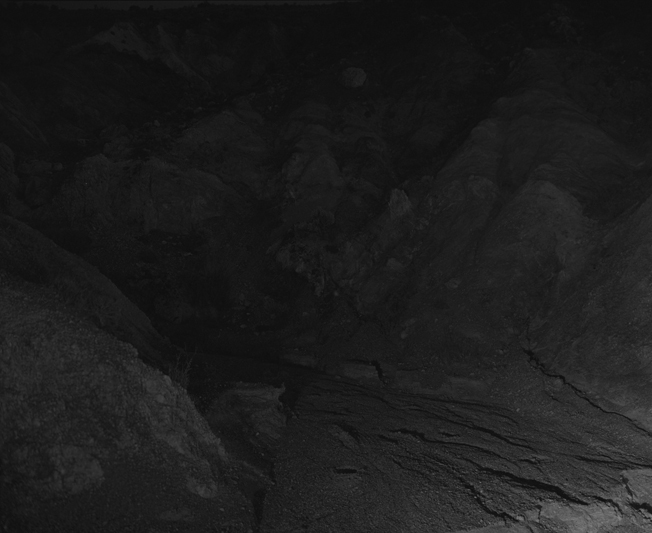 Awoiska van der Molen, rocks, silver gelatin print,
These kind of photographs in black and white do not entail an aesthetic of nostalgic preference for an early phase in the history of photography, or a counter to the programmed digital camera. The reason is that they unusually attentive to “the thereness of things and places”.There is a 'studiness' about them that requires a lot of observsation of the landscape and then a previsualization of the image.
|
|
|
| | Posted by Gary Sauer-Thompson at 3:17 PM | Permalink |
|
|
|
|
|
|
|
| Pingyao International Photography Festival 2014: Australian photographers |
|
September 21, 2014 |
|
|
|
There is an Australian presence at the Pingyao International Photography Festival 2014 in the ancient city of Pingyao, a world heritage site in China's Shanxi Province. Pingyao, south west of Beijing, is a walled city in Shanxi province which dates back to the fifth century. It is World Heritage listed, and its photo festival is staged at three former factories and five temples within the walled city boundaries
The Australian exhibition is entitled The Wizards of OZ. It is a group show featuring ten Australian artists who have participated in Core Program at the past three editions of the Ballarat International Foto Biennale in 2009, 2011 and 2013.
The Core exhibition program is the flagship of the festival, and aims to show work that covers the whole gamut of photographic craft-from photo documentary, through old processes, scientific and commercial works to fine art. Invitations are limited to between just ten to twelve Australian photographers to participate in the Core Program at each festival.
The Australian artists include Colin Page, Jackie Rankin, Judith Crispin, Sonia Macak, Tony Hewitt, Samantha Everton, John Gollings, Meredith O'Shea, Kara Rasmanis and Vikk Shayen Wong.
Shayen is a Singaporean/Australian photographer based in Melbourne. Her body of work entitled "Performanscape" was created for the Core program of the 2013 Ballarat International Foto Biennale. All performers and elements were photographed on location, nothing was added in post-production. Shayen's personal work is primarily concerned with perception and how it is created and altered; and she also takes an interest in the notion of displacement, placing the familiar in the unfamiliar and vice-versa.
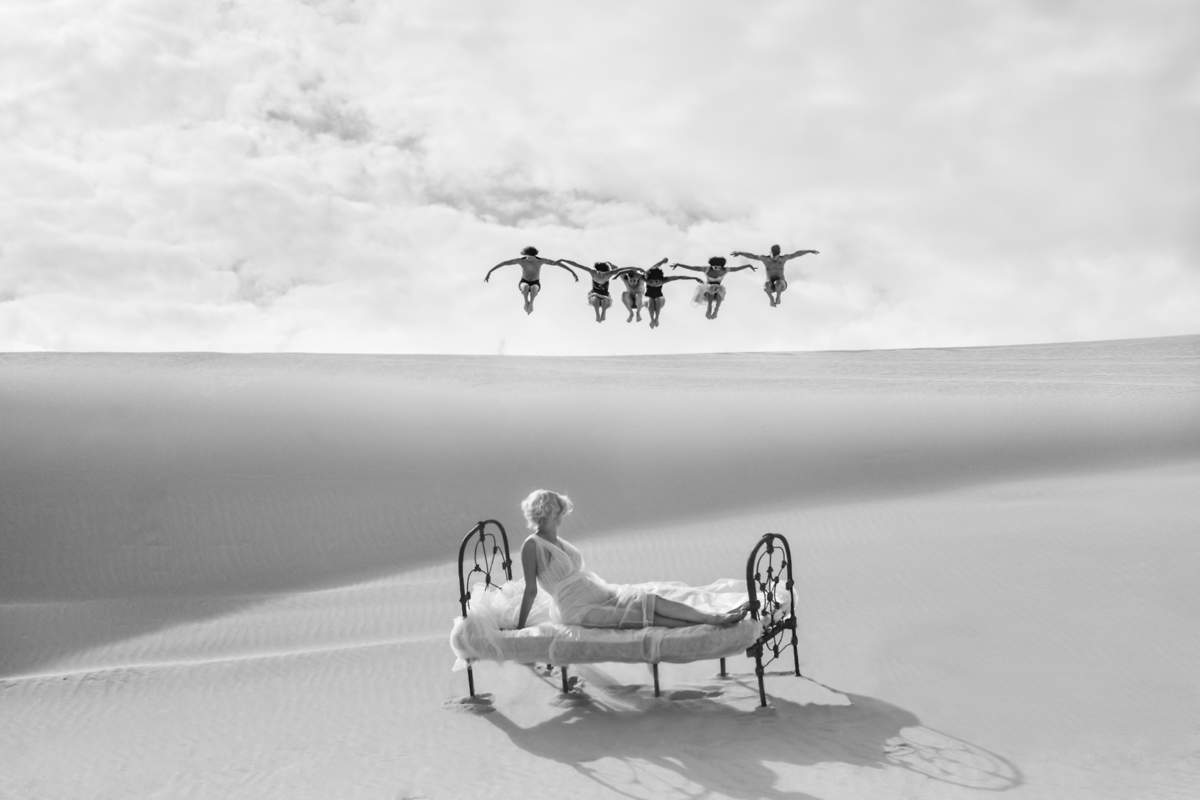 Vikk Shayen Wong, Scenarios in suspended consciousness No. 1, from Performanscape, 2013
Performanscape is a collaborative photographic project with various Australian performance artists and theatre makers. and it highlights the landscapes found throughout Australia that remain hidden from those living in urban areas. The premise is a pervasive cultural disconnection between city dwellers and the natural environment as well as the emergence of an increasing number of site–specific performances within the world of theatre.
Continue reading "Pingyao International Photography Festival 2014: Australian photographers" »
|
|
|
|
|
|
|
|
| Regional art: 'Of Obscured Significance' |
|
September 18, 2014 |
|
|
|
"Of Obscured Significance' is an exhibition of historical and contemporary, photographic and mixed media art at the Murray Bridge Regional Gallery. It is curated by Beverley Southcott and is concerned with explore what it is to be in the particular here and now ie., really noticing your place and what goes on around you. The photo-media artists include Mick Bradley, Louise Flaherty, Frank Grauso, Rachel McElwee, Murray Bridge & District Historical Society Inc., Lee Salomone and Beverley Southcott.
Mick Bradley is known in Adelaide for his recent City Streets book which he co-authored with Lance Campbell. This is the most thorough rendering of Adelaide’s streets ever. It takes the reader on an engaging stroll past Adelaide’s street fronts of 75 years ago and today. His body of photographic work also includes explorations of the regional landscape of the Adelaide hills:
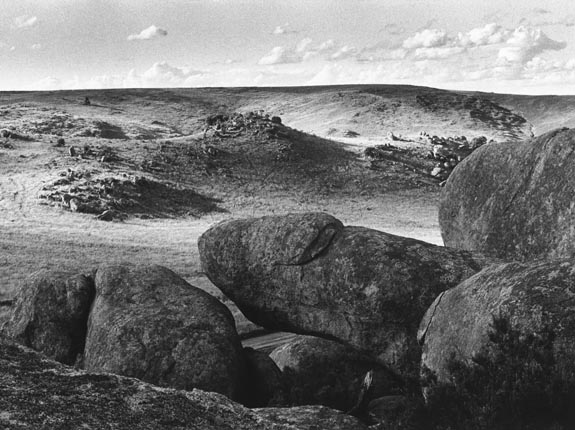 Mick Bradley, Palmer, silver gelatin print, 1984
This picture of the Mt Lofty Ranges brings our attention to the ways that daily significance of the regional South Australian landscape is obscured. This provides a new way of seeing our regional landscape afresh, since we drive past it in the car and only give it a quick glance through the car window.
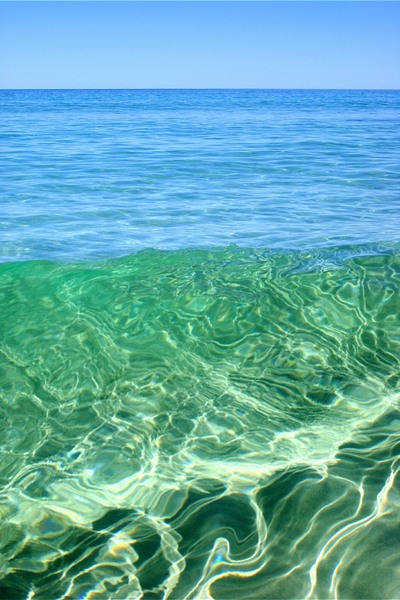 Mick Bradley, Kangaroo Island, South Australia
The exhibition has a conceptual emphasis on the exploration and development of ideas surrounding those moments and aspects in everyday life that are often deemed as just normal, ordinary, perhaps even non-essential, but are in fact potentially worthy and notable and should not simply be overlooked.
Continue reading "Regional art: 'Of Obscured Significance'" »
|
|
|
|
|
|
|
|
| Stephanie Valentin: Unseasonal |
|
September 11, 2014 |
|
|
|
The photographs of Australian landscapes in Stephanie Valentin's recent Unseasonal project are structured around creating strange juxtapositions - a single tree with a ladder propped on its side standing alone in a glassy lake, a silver cube sitting among sand dunes or twin bedheads rising from a flooded lake bed.
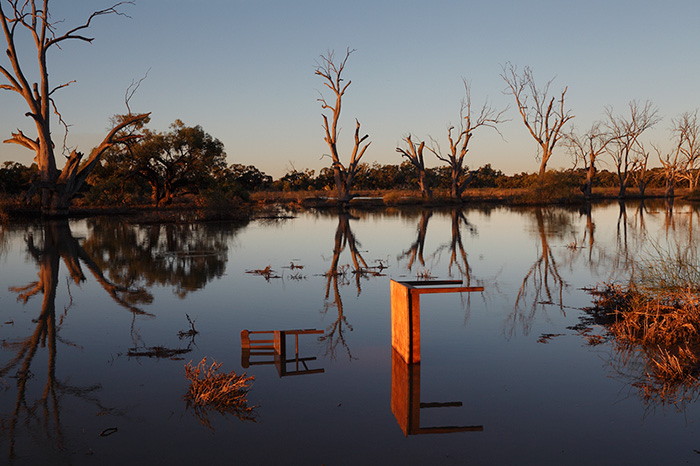 Stephanie Valentin, Still Water 1, from Unseasonal
Many of the images in the series have been created on location in and around the Murray River and its wetlands in eastern South Australia. The sites she has chosen often show evidence of an environment in transition.
Valentine's staging small interventions within these landscapes suggests some sort of recent upheaval:
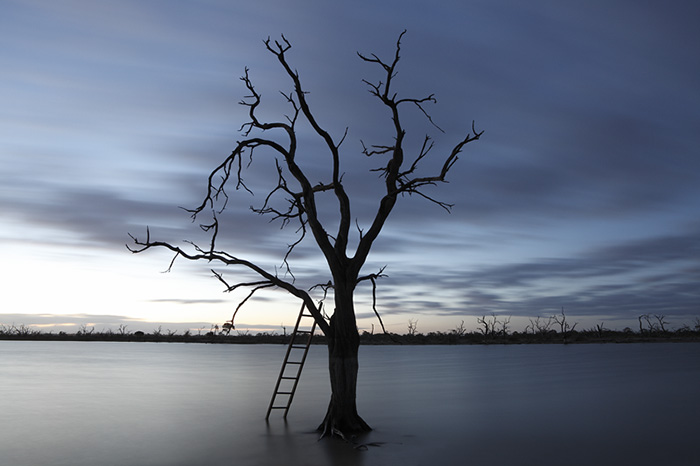 Stephanie Valentin, Still Water 1, from Unseasonal
A flood perhaps from unseasonal rains? That would explain how the interior spaces of the domestic, personal, blur into the exterior realm of land, weather and the river.
|
|
|
| | Posted by Gary Sauer-Thompson at 7:54 PM | Permalink |
|
|
|
|
|
|
|
| Shimmer Photography Biennal 2014: Alex Frayne |
|
September 2, 2014 |
|
|
|
One of the exhibitions that I have seen in the Shimmer Photography Festival in Adelaide is Alex Frayne's stimulating Adelaide Noir series at Magpie Springs.
This exhibition by the Adelaide based film director and photographer represents the beginning of a shift from the 'night-scapes’ in Adelaide and on the Fleurieu Peninsula to landscapes in the magic hour.
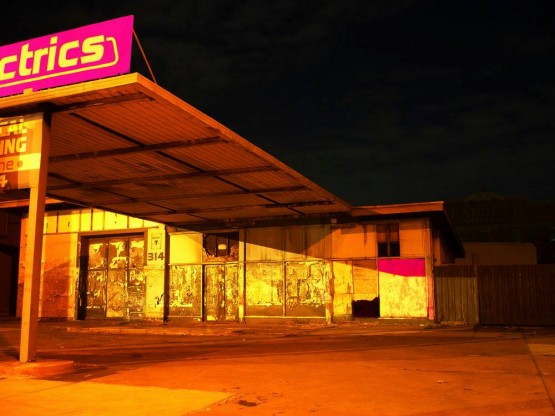 Alex Frayne, Servo, Port Adelaide, from the Noir series
Frayne's cinematic eye that focuses on the luminousity and surrealism of the urbanscape, landscape and suburbia. Night-time brings out an otherwordly of palette colours and a gamut emotions.
Some of the scenes were familiar to me --eg., the boatramp at Encounter Bay Victor Harbor for instance-- which I have seen at dawn and dusk. on my poodlewalks.
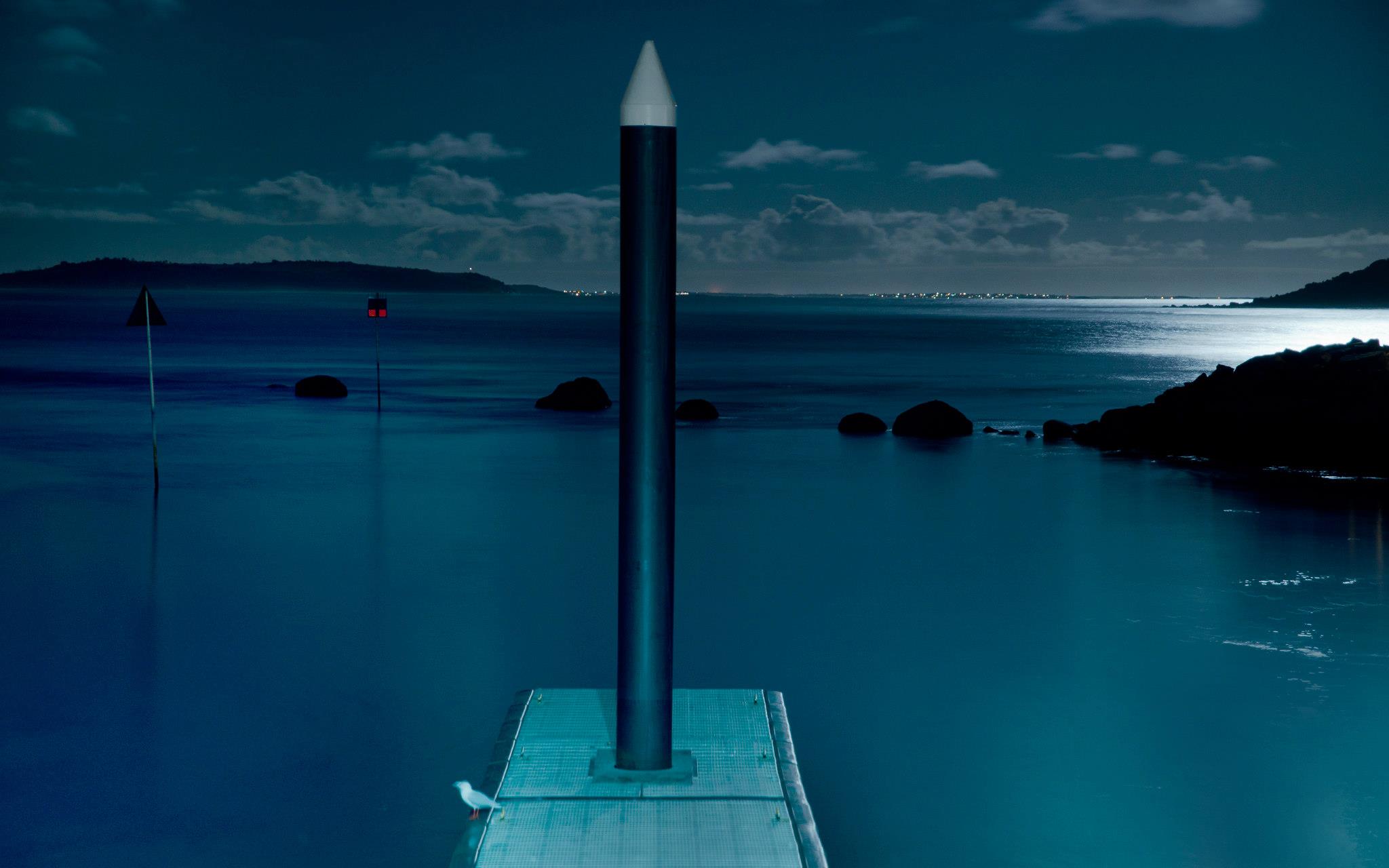 Alex Frayne, Seagull resting, Encounter Bay, from the Noir series
Frayne is able to represent the other wordly quality of the seascape. It is very different view to both the standard picture of a boring Adelaide, city of churches, and the fantastic art concerned with states of dream and hallucination.
Continue reading "Shimmer Photography Biennal 2014: Alex Frayne" »
|
|
|
| | Posted by Gary Sauer-Thompson at 7:47 PM | Permalink |
|
|
|
|
|
|
|


